Tuesday, July 24, 2007

The U.S. realism on the decision to use the atomic bomb

George F. Kennan to McGerge Bundy, December 2. 1947
I am afraid that if these statement were now to appear in an official biography of Mr. Stimson, a part of the reading public might conclude that the hope of influencing Russia by the threat of atomic attack had been and probably remained, one of the permanent motivating elements or our foreign policy page 472


I was going to sum up the book "The decision to use atomic bombs" by Gar Alperroviz, but I've found several sites that introduce, support or criticize his work.
So I'll just cite the link.


One implication of Alperroviz's theory is that Truman killed women and children just to intimidate Russia when there were militarily alternatives to end the war. *1I think that is one reason why his theory is embarrassing to some of Americans.

Anyway, I envy the fact the dabates over the decision to use the atomic bombs have been carried out without calling the opponent Holocaust Deniers, and without being politicized between the countries concerned.


"THE DECISION TO USE THE ATOMIC BOMB"
GAR ALPEROVITZ AND THE H-NET DEBATE
*2


THE OBLITERATION OF HIROSHIMA
Stephen R. Shalom
cash

Personally I've found Shalom's article best.
I couldn't find Barton Bernstein's important article *3on the subject, but we can guess its content from the the following site.
Truman's decision to use the A-bomb/ Barton Bernstein."Understanding the Atomic Bomb and the Japanese Surrender: Missed Opportunities, Little-Known Near Disasters, and Modern Memory" Diplomatic History Spring 1995. cash
(Alperoviz shed doubt on drawing the conclusion from the interviews with Japanese after the war.)

The followings are also interesting.

The Decision to Risk the Future: Harry Truman, the Atomic Bomb and the Apocalyptic Narrative

Peter J. Kuznick


linkHiroshima Didn't Have to Happencash
Atomic Bombing Of Hiroshima and Nagasaki
By Matin Zuberi
cash
The Atomic Bombing of Hiroshima
by Father P. Siemes
cash

Truman was a war criminal

By John Catalinotto
Published Aug 5, 2005 11:30 PM


HARRY S. TRUMAN WAR CRIMINAL


Encyclopedia Britannica can be said to be relatively neutral.
The decision to use the atomic bomb by Alonzo L. Hamby/- Encyclopaedia Britannica


Cooper is critical of Alperroviz's position.
Truman’s Motivations: Using the Atomic Bomb in the Second World War/Cooper(pdf)
cash
TAINTED DECISION: THE ATOM BOMB AND AMERICA's RUSH TO END WORLD WAR II

Documents on the decision to use the atomic bomb

Documents

documents

See also Hirosima again


*1 To end the war, Truman could have threat Japan that Russian would join, could have waited until Runssian invaded North China to let Japan know she was sandwiched by the biggest countries. could have given clearer terms for surrender.
(The U.S. did know the Emperor was seeking peace though Russia.)

*2
Part I: MAGIC Intercepts and Military Views/cash"THE RUSSIAN OPTION/cashON HOW VARIOUS ASPECTS OF THE "MYTH" WERE CREATEDON INTERPRETATIONS OF THE DECISION/cash
*3 for some reason his article "Atomic bomb reconsidered" is available in Japanese.


The Atomic Bombs and the Soviet Invasion: What Drove Japan's Decision to Surrender
The Winning Weapon?
The Winning Weapon? Ward Wilson
Rethinking Nuclear Weapons in Light of
Hiroshima/////
There is virtually no contemporaneous evidence that the U.S. use of a nuclear
weapon against Hiroshima created a crisis or that Japanese leaders viewed it as decisive.

nuclearfiles.org


[Documents menu] Documents menu

From nobody Wed Dec 31 09:48:41 2003
From: hycuqeuouv@moaeoou.org (Benedikt Brown)
Subject: Hiroshima 1945: Behind The U.S. Atom Bomb Atrocity
Newsgroups: soc.culture.african
Sender: Trina Clarke
Distribution: world
Organization: Mary Britton
Message-ID: <1072831049.330@news1.lynx.bc.ca>
Date: Tue, 30 Dec 2003 22:58:35 GMT
Hiroshima 1945: Behind The U.S. Atom Bomb Atrocity
By Fred Halstead, The Militant, 14 August 1995

On Aug. 6, 1945, and again on August 9, the U.S. government dropped the first and second atomic bombs on the Japanese cities of Hiroshima and Nagasaki. Tens of thousands of people died instantly, with thousands more dying later. This year marks the 50th anniversary of that atrocity.

The following article appeared in the Jan. 25, 1965, issue of the Militant under the headline What the Record Shows: U.S. Guilt at Hiroshima. The author, Fred Halstead, was a longtime leader of the Socialist Workers Party.

As the SWP's candidate for president in 1968, Halstead took a trip around the world, visiting Japan, South Vietnam, India, Egypt, West Germany, France, and Britain. In Japan he attended several peace conferences, addressing a session of the Japan Conference Against A- and H-Bombs on August 6 in Hiroshima.

That Japan was truly making sincere requests for peace, before and at the time of the Hiroshima A-bomb, is an undisputed fact of history. It is so well established that even popular history books and standard reference works recently published in this country cannot ignore it.

The obvious implications of the fact are so damning to the moral position of the American capitalist power structure and so unpleasant to the American people generally, however, that the fact is not often squarely faced in this country, even by many pacifist critics of the government's nuclear warfare policies. In the popular histories and reference works, it is generally glossed over with the briefest, most off-hand mention—after the style of West German textbook references to Nazi crimes—as if the unpleasant fact could somehow be buried and forgotten if it is given the low-key treatment.

And indeed the general impression still exists in this country (but not abroad) that somehow the dropping of the A-bombs on Japan caused the end of the war and eliminated a bloody invasion of the Japanese home islands, thus saving more lives than the A-bombs themselves snuffed out. This is a lie manufactured and spread in the first place by President Truman and British prime ministers Churchill and Attlee, who took responsibility for the decision to drop the bombs. It is nothing but the official trumped-up alibi for one of the most shocking and unjustified war crimes in all human history.

What are the facts? This is what the Encyclopedia Britannica (1959 edition) has to say: After the fall of Okinawa [on June 21, 1945], [Japanese Prime Minister] Suzuki's main objective was to get Japan out of the war on the best possible terms, though that could not be announced to the general public... Unofficial peace feelers were transmitted through Switzerland and Sweden... Later the Japanese made a formal request to Russia to aid in bringing hostilities to an end.

The Britannica then completes its coverage by saying that Russia rebuffed the Japanese overtures because it didn't want the war to end before it was scheduled to invade the northern areas occupied by Japan. What the Britannica fails to mention is that these Japanese overtures were known to Washington because the dispatches between Foreign Minister Togo in Tokyo and Japanese Ambassador Sato in Moscow were intercepted by the United States.

The entire affair is documented in the Hoover Library volume Japan's Decision to Surrender, by Robert J.C. Butlow (Stanford University, 1954). Butlow quotes the dispatch that was received and decoded in Washington on July 13, 1945:Togo to Sato...Convey His Majesty's strong desire to secure a termination of the war...Unconditional surrender is the only obstacle to peace. These requests continued through July.

Butlow documents that Washington knew the one condition insisted upon by the Japanese government was the continuation of the emperor on his throne and the symbolic recognition this implied of the Japanese home islands as a political entity. As it turned out this was exactly the condition that was granted when the peace was finally signed after the A-bombings August 6 and 9.

If the U.S. government knew as early as July 13 that the leading circles in Japan were seeking peace on those terms, why didn't it pursue this possibility for peace instead of ignoring it and proceeding with the A-bombings? There is simply no satisfactory answer to this question from the point of view of the military demands of ending the war—even on U.S. imperialist terms—and saving soldiers' lives.

Twice guilty As Hanson W. Baldwin, the New York Times military analyst, said in his book Great Mistakes of the War (1949):

Our only warning to a Japan already militarily defeated, and in a hopeless situation, was the Potsdam demand for unconditional surrender issued on July 26, when we knew the Japanese surrender attempt had started. Yet when the Japanese surrender was negotiated about two weeks later, after the bomb was dropped, our unconditional surrender demand was made conditional and we agreed, as [Secretary of War] Stimson had originally proposed we should do, to continuation of the Emperor upon his imperial throne.

We were, therefore, twice guilty. We dropped the bomb at a time when Japan already was negotiating for an end of the war, but before these negotiations could come to fruition. We demanded unconditional surrender, then dropped the bomb and accepted conditional surrender, a sequence which indicates pretty clearly that the Japanese would have surrendered, even if the bomb had not been dropped, had the Potsdam Declaration included our promise to permit the Emperor to remain on his imperial throne.

Why, then, did the United States drop the bombs? One of the few writers who claims to believe the official alibi is Robert C. Batchelder, author of the well-documented The Irreversible Decision (1962). Even Batchelder admits: It seems clear that had the [U.S.] attempt to end the war by political and diplomatic means been undertaken sooner, more seriously, and with more skill, the decision to use the atomic bomb might well have been rendered unnecessary.

Batchelder explains the affair away by attributing it to U.S. diplomatic inefficiency and a tendency in U.S. leaders to deal with the war in purely military terms and neglect political aspects. But the evidence indicates the final A-bomb decision was made precisely for political reasons.

Indeed, some top U.S. military men—including Eisenhower and the chief of staff of the U.S. armed forces at the time, Adm. William D. Leahy—declined to support use of the bomb. In his book, I Was There (1950), Leahy says: it is my opinion that the use of this barbarous weapon at Hiroshima and Nagasaki was of no material assistance in our war against Japan. The Japanese were already defeated and ready to surrender because of the effective sea blockade and the successful bombing with conventional weapons.

It was my reaction that the scientists and others wanted to make this test [!] because of the vast sums that had been spent on the project. Truman knew that, and so did the people involved. However, the Chief Executive made the decision to use the bomb on two cities in Japan.
Live targets

This test on Hiroshima and Nagasaki cost, by the conservative American estimates, 110,000 dead and as many injured; and, by Japanese estimates, twice that many. The evidence strongly indicates that one major motivation of the A-bomb decision was precisely to test the bomb on live targets, so as to confront the postwar world with the proven fact of overwhelming U.S. military superiority. It also established the fact that U.S. imperialism not only had the bomb but had the ruthlessness to use it.

The haste with which the bomb was used indicates that the U.S. purposely ignored the Japanese peace requests (which were known in Washington on July 13) in order to drop the bomb before the war ended. No one was sure the bomb would work until July 18 when it was tested in New Mexico. The only other two bombs in existence were quickly dispatched to the Pacific base and were dropped on August 6 and 9. This haste is unexplained by combat problems. By that stage of the war U.S. bombers and ships encountered no serious resistance and no U.S. troop attacks were scheduled until November 1, so the haste was not necessary to save American lives.

One of the most thoughtful works on the subject is that by the British nuclear scientist, P.M.S. Blackett, entitled Fear, War and the Bomb (London, 1949). Blackett points out: If the saving of American lives had been the main objective, surely the bombs would have been held back until (a) it was certain that the Japanese peace proposals made through Russia were not acceptable, and (b) the Russian offensive, which had for months been part of the allied strategic plan, and which Americans had previously demanded, had run its course.

Bomb aimed against Soviet Union This last is the final piece in the puzzle. It is Blackett's well-founded thesis that one reason for the haste was to drop the bomb before the Russians entered the war against Japan. The allies had already agreed at Yalta that the USSR would attack Japan three months after Germany surrendered. Stalin had notified the United States that the Russian armies would be ready for that attack on schedule, that is, August 8. The bomb was dropped on Hiroshima August 6.

In another book by Blackett, Atomic Weapons and East- West Relations (London, 1956), the scientist discusses the later feelings of some of his American colleagues who had been involved in the decision to use the A-bomb:

The opposition between 1949 and 1951 of so many atomic scientists to the H-bomb program must, I think, be taken as the price the American Government paid for lack of candor in 1945. If the scientists had been told that Japan had been essentially defeated and was suing for peace, but that the dropping of the bombs won for America a vital diplomatic victory, since it kept the Soviet Union out of the Japanese peace settlement and so avoided the difficulties and frictions inherent in the German surrender, I expect most would have accepted, however reluctantly, the practical wisdom of the act. They were not told this, but they were told that the bomb saved untold American lives. When they later learnt that this was rather unlikely, many of them must have begun to fear that their government might not be able to resist some future temptation to exploit America's atomic superiority...

To sum up: That Japan was defeated and suing for peace before the bombs were dropped is a fact established beyond doubt. The motivations of U.S. rulers in dropping the bombs anyway is, of course, a disputed question. But the evidence utterly fails to support the official alibi that it was done to avoid costly battles. On the contrary, the evidence overwhelmingly indicates that the civilian populations of Hiroshima and Nagasaki were murdered, not to end World War II, but to launch what later came to be known as the cold war.
link


[Documents menu] Documents menu

From nobody Tue Mar 4 16:38:18 2003
From: auvoazrc@veefydvf.org (Aurelia Keene)
Subject: A-Bomb: Part Of U.S. Imperialist War Drive Today
Newsgroups: soc.culture.african
Sender: Marcellus Huiett
Distribution: world
Organization: Saskia Hardman
Message-ID: <1045935843.784768@news1.lynx.bc.ca>
Date: Sat, 22 Feb 2003 17:13:36 GMT
Why America dropped the atomic bomb, by Ronald Takaki
Reviewed by Patti Iiyama, 9 October 1995

Why America dropped the atomic bomb
by Ronald Takaki
pp. New York: Little, Brown and Company, 1995.
$16.95 paper.

With

Hiroshima Eyes: Atomic War, Nuclear Extortion and Moral Imagination
by Joseph Gerson
203 pp. Philadelphia: New Society Publishers, 1995
$19.95 hardcover.

At 8:15 on the morning of Aug. 6, 1945, a U.S. bomber dropped an atomic bomb over Hiroshima. Some 70,000 people, many of them school children who had been mobilized to build firebreaks, died instantly. Birds in flight ignited. The heat of the blast kindled a raging fire that seared the city. It was followed by a black rain. More than 60,000 died within months from burns, radiation poisoning, and shock. Another 70,000 died by 1950.

The 50th anniversary of the atomic bombing of Hiroshima and Nagasaki, in August, revealed a deepening debate in this country over why the U.S. government dropped this new, horrible weapon. The big-business press launched a campaign to defend the use of the bomb.

On one hand most editors, commentators, and politicians have argued that the bomb helped save lives by making a U.S. invasion of Japan's main islands unnecessary.

On the other hand, a recent Gallup poll cited in Newsweek shows that people over the age of 50 narrowly approve the use of the atomic bomb, and that most younger Americans, especially those under 30, believe that using the atomic bomb was wrong. Moreover, an increasing number of historians and academics say the traditional accounts of the bombings, based on the government's version, should be revised. They argue that dropping the bomb was militarily unnecessary.

Many books have been published on this 50th anniversary. Among those defending the revisionist school are: Ronald Takaki's Hiroshima: Why America Dropped the Atomic Bomb and Joseph Gerson's With Hiroshima Eyes: Atomic War, Nuclear Extortion and Moral Imagination. Both summarize the facts that show the bomb was not needed to force Japan's military regime to surrender.

Takaki and Gerson point to Washington's anxiety about Soviet domination in China and other Asian countries, as well its occupation of eastern Europe. The dropping of the atom bomb, they say, was primarily a political warning to the Soviet Union and heralded the beginning of the Cold War.

The truth, however, is more complex. The bombing of Hiroshima and Nagasaki was the opening shot in a new hot war Washington was preparing: to crush the massive revolt against colonial oppression from China to India beginning to sweep the world, prevent the spread of the socialist revolution, and to move toward rolling back the conquests working people had won in the Soviet Union in order to restore capitalism there. The U.S. rulers boasted that they were launching the American Century.

In spite of its initial monopoly of this new and terrible means of mass destruction, however, Washington quickly ran into insurmountable roadblocks in its war drive. It was forced to retreat to conducting what it called a cold war.
Origins of Pacific War

In order to understand why the people of Hiroshima and Nagasaki were sacrificed, it is important to know why the war in the Pacific was fought. Washington said the Japanese military regime's aggression in Asia had to be stopped and the bombing of the U.S. naval base at Pearl Harbor on Dec. 7, 1941, had to be avenged.

The real driving force behind the war in the Pacific, however, was the fight between the profit-hungry predators in the United States and Japan over, as Gerson states, the expansion and maintenance of empire in the Pacific and Asia.

Since capitalism developed relatively late in Japan, its rulers were not able to participate in the earliest imperialist divisions of Asia. But with the 1895 Sino- Japanese War, Tokyo began to wrest colonies from other imperialist powers by seizing control of Taiwan, Korea, and parts of northern China. In 1932 the Japanese imperialists invaded Manchuria and established a puppet government there.

Their major rival for control of Asia was the capitalist ruling class in the United States, who had long been eyeing China as a huge market for selling goods and investing capital. In the 1930s, the growing protectionist trade barriers imposed by the U.S. and European governments fueled the Japanese drive to conquer China and Southeast Asia in order to obtain oil, rubber, iron ore, and other raw materials.

By the spring of 1942, Tokyo, in a series of stunning victories, had conquered Indonesia, Indochina, the Philippines, Malaya, and Burma. Its troops were at the threshold of invading Australia, India, and Laos and controlled most of eastern China. But by the end of 1942, the tide was beginning to turn.

The overwhelming industrial and military might of the U.S. capitalists crushed their Japanese rivals. By the end of 1944 oil shipments from the East Indies had almost stopped, imports had fallen by 40 percent, half of Japan's merchant fleet and two-thirds of her tankers were destroyed.

On March 9, 1945, the U.S. military began firebombing Japanese cities, starting with Tokyo. City after city came under attack. Virtually every industrial center was destroyed. A report by the Japanese cabinet acknowledged that the steel and chemical industries were about to collapse, the railway system would soon cease functioning, and shipping was insufficient even to maintain transportation between the main islands of Japan.

Recognizing that the war was lost, Tokyo began to send out peace feelers to governments in Europe. Then, in early July, the Japanese government requested the Soviet Union, which had not yet entered the Pacific war, to mediate between Tokyo and Washington to end the war. The only condition the Japanese officials placed on their surrender was that Hirohito and the emperor system be preserved.

In spite of a recommendation by the Joint Chiefs of Staff and the cabinet that the U.S. government accept conditional surrender, U.S. president Harry Truman and British prime minister Winston Churchill rejected the Japanese government's efforts to end the war. Instead, they issued a joint statement on July 25 saying that they would accept only un-conditional surrender from the Japanese regime.

Three weeks later, Washington accepted the Japanese surrender on the same terms that Tokyo had proposed in July. The only change was the atomic bombing of Hiroshima and Nagasaki.

As early as 1946, two U.S. government studies concluded that the bombings were not a military necessity. In addition to the recently discovered War Department Operations Division study, the official U.S. Strategic Bombing Survey judged that certainly prior to 31 December 1945 and in all probability prior to 1 November 1945 [the date of the planned Kyushu invasion], Japan would have surrendered even if the bombs had not been dropped, even if Russia had not entered the war, and even if no invasion had been planned or contemplated.

Takaki points out that Tokyo exhorted Asians to unite in a race war against the white brutes, wild beasts, and hairy savages of Europe and the United States. This demonization of the enemy justified atrocities like the infamous Bataan Death March, which occurred in 1942 after 76,000 American and Filipino soldiers surrendered to the Japanese in the Philippines. On the 65-mile forced march to their internment camp, 7,000 were bayoneted or clubbed to death or buried alive when they fell behind.

At the same time, Washington stereotyped the Japanese as loathsome buck-toothed little yellow savages. This racist dismissal of the Japanese as less than human was the propaganda used to get acceptance in the United States for Washington's war against Japan and for its bombing of Hiroshima and Nagasaki.

Takaki puts forward the view that Truman's racism and psychological insecurities are the key to understanding why the U.S. government dropped A-bombs on Hiroshima and Nagasaki. Truman's policies were racist, but singling this out throws Takaki's book off balance. The U.S. capitalist ruling class had larger political considerations in mind when it decided to incinerate the populations of two Japanese cities.

Preparations for a `hot' war Soon after the Japanese government surrendered on August 14, President Truman halted all lend-lease shipments, including food, to the Soviet Union, one of its war-time allies. Takaki quotes Acting Secretary of State Joseph Grew as saying, A future war with Soviet Russia is as certain as anything can be certain.

By October, Truman was attempting to rally the people of the United States for a confrontation with the USSR. There can be no compromise with the forces of evil....[The] atomic bombs which fell on Hiroshima and Nagasaki must be a signal, the president asserted.

The U.S. rulers were preparing for a new war. By dropping the bombs on human beings, they showed that they had no qualms about using this incredibly destructive weapon, over which they had a monopoly. One of their immediate aims was crushing the democratic revolution in China that they feared could overturn capitalist rule there. This was the prize for which they had waged a bloody war with their Japanese rivals for nearly four years. At the same time they wanted to drive the Soviet Union out of Eastern Europe.

Although Washington had started to put everything into place to fight another war, it was prevented from doing so for two reasons beyond its control: the refusal of Chinese workers and peasants to be cowed into submission, and the mass protests of U.S. troops after the war demanding, Bring us home now.

Thus, the U.S. warmakers were not able to launch the hot war to establish the American Century.

Since 1945 Washington has threatened or considered using nuclear weapons many times. Gerson details a few of these occasions: during the Korean war, at the end of the Indochina war in 1954; the 1962 missile crisis; the Vietnam War, and in the Middle East from 1946 through the Gulf War in 1991. It weighed the political price it would pay for using nuclear bombs in each instance and decided not to do so.

In the course of documenting the U.S. government's nuclear extortion over the last 50 years, Gerson aims his guns at the Cuban government for its contribution to the intensity of the [1962 missile] crisis. He states that during that crisis, Fidel Castro pressed Nikita Khrushchev to launch a preemptive nuclear attack against the United States in the event of a U.S. invasion of Cuba. Gerson repeated the same slander during the July 31-August 2 International Symposium in Hiroshima where he was a featured speaker. That gathering marked the 50th anniversary of Washington's A-bomb attacks on Japan.

Gerson fails to mention that the proposal to place missiles and tactical nuclear weapons on Cuban soil was not Cuba's, but the Soviet government's for its own foreign policy goals. At a January 1992 conference in Havana that brought together participants from Cuba, the Soviet Union, and the United States to discuss the 1962 missile crisis, Castro said: We were not too pleased with the missiles actually. If it had been a matter only of our defense, we would not have accepted the emplacement of the missiles here. This was not because of the dangers involved, Castro said, but rather because this would damage the image of the revolution....The presence of the missiles would in fact turn us into a Soviet military base and that had a high political cost.

Orlando Fundora López, the Cuban representative participating in the Hiroshima conference, refuted Gerson by explaining that the Cuban revolution has never relied on Soviet missiles or weapons, but the armed power of the Cuban people, for its defense. It was, in fact, the massive mobilization of the Cuban people during the missile crisis that convinced the Kennedy administration of the difficulties of invading the island and the political price that would be paid.

Neither Takaki nor Gerson, while agreeing that nuclear weapons must be banned and dismantled, can suggest a realistic solution, other than placing political pressure on the governments with nuclear weapons.

But the question of nuclear weapons and their use is connected to the drive of the capitalist rulers toward war. Today—as the competition between the capitalist profiteers has become more intense—political, economic, and military conflicts are growing. Since the 1991 Gulf War, the possibilities of a third imperialist world war are clearer.

Only if working people wrest power out of the hands of the capitalist exploiters and establish their own government can workers and farmers bring an end to horrible predatory wars for profits and get rid of all nuclear weapons.

Patti Iiyama is a member of Oil, Chemical and Atomic Workers Local 4227 in Houston, Texas. She had relatives who were killed by the atomic bomb dropped on Hiroshima.
link

Monday, July 23, 2007

Iran Asks Japan to Pay Yen for Oil, and Japan's reactoin is....

Iran Asks Japan to Pay Yen for Oil, Start Immediately
She was reluctant, saying it had no merit, according to Sankei as of July 14
A Japanese strategist was predicting that Japanese company would reject the request because Japan needed to side with the U.S. in pushing Iran into the corner.
Anpontan was warning that Japan might" start to find it advantageous after the House passes its resolution."
Asahi , as of July 18, reports that the president of the oil association is considering it in a positive light, saying "it has nothing to do with politics, it is a matter of trading conditions."
Another Japanese blogger suggests the government not to interfere since the president says, "it has nothing to with politics."

Let's see how it will develope.

Sunday, July 22, 2007

Debito all too Debito (3)


Former UCLA player gets Japanese citizenship, spot on national hoops team


When Deibto writes it,
Here’s one way to avoid the accusation that foreigners in Japanese sports make events too boring:

Where did the article in question say he naturalized to avoid the accusation that foreigners make the event too boring?

Sakuragi, a 203-cm forward, is expected to be a big presence in the paint for Team Japan in the upcoming Asia Championship in Tokushima,


It seems logical that he needs Japanese citizenship.
According to the article, it was Japanese who longed for him.
Why can't we just welcome him?
Is it another instance of racism?
Is it Debito's magic that the story in which Japanse welcome this person as a Japanse national turns to his favorit subject of racism?


That said, Asahi article he linked is also misleading.

The slogan of high school sport associations could be: If you can't beat 'em, ban 'em


The restrictions followed protests from Japanese fans who say the superior ability of the foreign students is making the sporting events dull.

In May, the All Japan High School Athletic Federation decided to ban foreign students from running the first leg in the All Japan High School Ekiden Championships,

Debito says,
"But I don’t think the organizers of these events really understand what “being sporting” is all about. To them sports are great, as long as Japanese win."

In Ekiden, a Japanese school wins whoever the member.
So the case is not what Asahi writer and Debito want it to represent as.
The real problem is
"The schools bring the foreign students here just to publicize the names of their schools. They are not suitable for high school sport competitions."

The school represents the local district, and the local people support the school because of it , but if students come from other districts just for the school to win, , some local people are put off.
The problem has been pointed out and there are voices that Japanese students from other prefecture should be restricted.*1

As for this issue, it is my opinion that sports association should not interfere in this matter; whoever the member, if the school trained them, if the locals nurtured them, the school and the local people should be proud of them.


Debito all too Debito(2)

..................................................................................

*1
スポーツ
県立高校の監督は「特待生は私立の経営にもかかわる。問題は越境入学だ」と指摘。「隣接県は仕方がないが、県を飛び越えるようなことには歯止めを掛けるべき」と提言していた


留学生・金選手 「韓国で本場の剣道を」 シード校苦しめた文徳大将cash

Saturday, July 21, 2007

comfort women /Senator Daniel K. Inouye on resolution 121--- Holy shit,!!Inoue, It's red-herring.

I can think of many events in our own historic past that deserve an acknowledgement and apology issued by the United States. Nonetheless, our Government has not acknowledged these actions and other countries have not officially reprimanded us because of it.

For example, soon after December 7, 1941, the United States contacted the Governments of Chile and other South American countries and requested that they round up their residents of Japanese ancestry and send them to the United States to be used by the United States in negotiations for the return of American prisoners of war held by Japan.

Many Latin Americans of Japanese descent were arrested, stripped of their passports or visas, and shipped to the United States. Once in the United States, they were treated as illegal aliens, subject to deportation and repatriation. ステージ風発(魚拓)

So probably you also want to talk about Japanese comfort women , Korean comfort women, Vietnamese prostitutes under the U.S. occupation. don't you?
Did the U.S. force the women to be sex slaves?
They were not sex slaves; they were paid for living.
We allowed the brothels to run for GIs. We even asked the local to do so. We even carried out the medical checks for VD. The then the U.S military was, directly or indirectly, involved in the establishment and management of the comfort stations. Coercion happened, Deceptions happened. But we didn't order it: the local people did it. They were like slaves? It is not our faults, it is brothel owner's fault, and Asia were poverty stricken; that is the the way they had to live. Don't tell me we systematically forced the women into the brothels---- ----Oh yes, there were rape cases by military officers, but that were exceptions. They did it against our policy. See, we are not deniers.

Did Japan apologize several times ? Do it as clearly as possbile. Does the U.S. have to apologize?----Who are you to say this, anyway?--- Inoue?
Oh, it is a Jap , again. Perhaps the US should first retract its apology for the internment of Japanese-Americans or have the President question whether or not the Trail of Tears ever existed first, t"......

.....Sarcasm aside, Japanese should keep in mind there is a great American politician like Daniel Inoue.


..................................................................................
全文
H. RES. 121 -- (Senate - July 09, 2007)

[Page: S8789]

---

Mr. INOUYE. Mr. President. On June 26, 2007, the Committee on Foreign Affairs of the U.S. House of Representatives met to consider and adopt H. Res. 121. This resolution was authored by Congressman Michael Honda of San Jose, CA.

H. Res. 121 expresses the sense of the U.S. House of Representatives that the Government of Japan should formally acknowledge, apologize, and accept historical responsibility in a clear and unequivocal manner for its Imperial Armed Force's coercion of young women into sexual slavery, known to the world as ``comfort women,'' during its colonial and wartime occupation of Asia and the Pacific Islands from the 1930s through the duration of World War II.

There is no doubt in my mind that during the war period the men in the Imperial Armed Forces of the Government of Japan did abuse, assault, and forcibly impose their wills upon women for sexual purposes. This was conduct and behavior that cannot in any way be condoned or justified.

These events, according to H. Res. 121, occurred during the war period of the 1930s and 1940s. Records indicate that on August 31, 1994, as the 50th anniversary of the end of World War II was approaching, then Prime Minister Tomiichi Murayama issued a statement articulating Japan's remorse and apology to comfort women.

This statement was made in his official capacity as Prime Minister of Japan.

Subsequently, every successive Prime Minister since 1996--Prime Ministers Hashimoto, Obuchi, Mori, and Koizumi--have all issued letters of apologies to individual former comfort women, who have accepted an apology letter along with atonement money offered to her by the Asian Woman's Fund. It should be noted that some former comfort women refused to accept the atonement money.

The Asian Women's Fund was established, sanctioned, and approved by the Government of Japan. The letters addressed to former comfort women were issued by the Prime Ministers of Japan in their official capacity, and recite, ``as Prime Minister of Japan, I thus extend anew my most sincere apologies


and remorse to all the women who underwent immeasurable and painful experiences and suffered incurable physical and psychological wounds as comfort women.

On March 11, 2007, Prime Minister Abe made the following statement:

I will stand by the Kono Statement. This is our consistent position. Further, we have been apologizing to those who suffered immeasurable pain and incurable psychological wounds as comfort women. Former Prime Ministers, including Prime Ministers Koizumi and Hashimoto have issued letters to the comfort women. I would like to be clear that I carry the same feeling.

The 1993 Kono statement made by the Chief Cabinet Secretary Yohei Kono stated in part:

The then Japanese military was, directly or indirectly, involved in the establishment and management of the comfort stations and the transfer of comfort women. ..... The Government of Japan would like to take this opportunity once again to extend its sincere apologies and remorse to all those, irrespective of place of origin, who suffered immeasurable pain and incurable physical and psychological wounds as comfort women.

The Asian Women's Fund was established in 1995 with the cooperation of the Government of Japan and the Japanese people. The fund has extended letters of apology and payments, donated by the Japanese people, to 285 former comfort women in the Philippines, the Republic of Korea, and Taiwan

I have taken the time to cite the above because of my concern over the adoption of H. Res. 121, the Honda Resolution.

It should be noted that after World War II, the issue of compensation for Japan's wartime crimes was settled, country by country, by the Treaty of San Francisco with the U.S. and by the relevant peace treaties with other countries. Thus, from a purely legal standpoint, the issue of the comfort women has been settled by treaties of peace.

Several questions come to mind as I read the text of statements made on this matter, and the text of H. Res. 121. For example, what would be required of Japan under H. Res. 121 to ``formally acknowledge, apologize, and accept historical responsibility in a clear and unequivocal manner''?

The statements of apology that I quoted earlier were issued by six Prime Ministers of Japan, each acting and speaking in his official capacity.

I would think that in the world of diplomacy, these words would suffice as official statements.

Another matter that should be noted is that these events occurred in the 1930s and 1940s, and the acknowledgment and apology over the abuse of the comfort women have been made by successive Prime Ministers since 1994.

I can think of many events in our own historic past that deserve an acknowledgement and apology issued by the United States. Nonetheless, our Government has not acknowledged these actions and other countries have not officially reprimanded us because of it.

For example, soon after December 7, 1941, the United States contacted the Governments of Chile and other South American countries and requested that they round up their residents of Japanese ancestry and send them to the United States to be used by the United States in negotiations for the return of American prisoners of war held by Japan.

Many Latin Americans of Japanese descent were arrested, stripped of their passports or visas, and shipped to the United States. Once in the United States, they were treated as illegal aliens, subject to deportation and repatriation.

The internees' vulnerable position under the law basically left their fate in the hands of the State Department and Department of Justice. Those caught in this situation were considered repatriable and thus available for use in hostage exchanges with Japan.

I am happy to report to you that after many years of concern, the Senate Committee on Homeland Security and Governmental Affairs has considered this matter and reported favorably on a measure to study this matter. However, the bill still faces consideration by the full Senate, the House of Representatives, and the White House.

And yet has any country suggested we should ``formally acknowledge, apologize, and accept historical responsibility in a clear and unequivocal manner'' for this matter?

Nor have the legislatures of other nations criticized and accused us for Executive Order 9066, which directed the United States Army to establish 10 concentration camps in various parts of the United States to intern residents of Japanese ancestry.

Regardless of the historical example, the question remains the same: how would the U.S. Government have reacted if the legislature of some other nation had condemned our historical actions in World War II?

Diplomatic protocol among friendly nations and allies calls for consideration and sensitive handling of such matters.

In the case at hand, I respectfully suggest that the Government of Japan, through six of its Prime Ministers, and through two acts considered by its House of Representatives, has issued statements of acknowledgement and apology since 1994.

I would suggest that so many apologies should suffice.


As a final matter, it may be interesting to note that a Gallup Poll conducted in February and March 2007 sets forth the following: 74 percent of the general public, and 91 percent of opinion leaders thought of Japan as a dependable ally or friend. 48 percent of the general public, and 53 percent of opinion leaders considered Japan to be the most important U.S. partner in the Asia region, followed by China, which scored 34 percent among the general public, and 38 percent among opinion leaders. 67 percent of the general public, and 86 percent of opinion leaders described U.S. relations with Japan as ``good'' or ``excellent.'' 87 percent of the general public, and 88 percent of opinion leaders supported the maintenance of the Japan-U.S. Security Treaty.

Finally, when asked whether Japan shared common values with the United States, 83 percent of the general public, and 94 percent of opinion leaders agreed. The only country that received a higher score was the United Kingdom, by only 2 percent for each group.

These numbers and responses to the Gallup Poll should suggest our relationship with Japan is excellent. The general public believes it, and our Government has said so as well. Why should we involve ourselves in a legislative act that would jeopardize a relationship as good as we share with Japan?

Is this how we Americans should conduct ourselves with the Japanese, our friends and allies?

END

Friday, July 20, 2007

Therapeutic aspect of hisory

{I]t's not particularly illuminating, historically speaking , to know simply that I stole a car; what would be interesting would be to offer some explanation for that anomalous behavior---to construct some sort in which that theft made sense, where I continued to appear as a reasonably coherent character, and the past seemed to re-acquire some meaning. That sort of story might have some use in relation to the future--my future and that of penitently vulnerable car-owners. And even in that very simple example , the point, surely, is that there's no one story that will tell it all---no single standpoint from which a definitive history can be "truthfully written.....It's not some hypothetical 'essence of a supposedly 'truthful past that matters, but rather what we do with it---how we 'em-plot" it (making our story tragic or comic or satiric, or whatever)l and that depends on what it's for.
page 110
..we are invited to consider a page on which is inscribed a random pattern of dots. ...Once we've identified that face....we have succeeded in making sense of what's in front of us....But the corollary ---...is , of course, the exclusion of a host of other possibilities. page 112

This is a good model for explaing what can be constructed based on given facts.


when forced to recognize that we too will soon be past, we may be more inclined to ascribe a value to that past and assert that some consideration and care is due to that past. page 116

History is thus revealed again as having a therapeutic function, in that it's taken to respond to every one's demands to have their memories taken care of. And that can be the case at both personal and public level. page 117

That narrative , ..is not something fixed..but is itself constantly revised and renewed, as we continue to respond to and adapt to changing circumstance. page 119

So history is about what it means and it could mean to be me, Japanese, Human beings, etc and that question makes sense against the changing background.

As we lose those geographical and racial 'others' of whom we previously made use, we many need now to seek chronological 'others'--others in the past , others past people and values , in contrast with whom and with which we continue to define our selves. And in that case, we need history to provide us with models, not so much to emulate as to repudiate----models to contrast with which we can see what we are and should be.....
It's easy enough to to accept evidence and to believe witnesses from the past that confirm our beliefs and expectations, consolidate our definitions of what's 'obvious' or 'common sense' .....It requires a rethinking of the past and of what would have been possible in that past; for by opening up such possibilities fro the, , we make them possibilities for now---for us now in the present. .....by reading the conditions of the possibility of that future into the past and history thus becomes, once more, a path to a more hopeful future......The whole modernist goal of stable personal personal and public identity , for all its comforting securities, has been replaced by such recognition of diversity---such openness to difference page 121

The 'popular' way of strand of history in the United States is represented by the work of Ken Burns....
....his particular recasting of American history has come to play a central role and vital role in shaping the public sense of who we have been and who we are
page 138

Burns' histories don't deny such evils in the past as slavery; indeed , as Harlan claim, they forces 'white Americans to accept their own complicity'.But that acceptance is not doomed to lead to negativity, but is to be seen on the contrary as a prerequisite for liberation. For Burns, what is to be emphasized in history---what it's for ----is its 'redemptive possibles' ....'how we mean to live but do not yet live. page 140

Just as a story is used in the therapy to help people to form new possiblity, new relations with others, hi-story can function that way.
"What is History for" Beverley Southgate

Buddhism's self as I see it.

Because all things are thus conditioned and transient (anicca), they have no real independent identity (anatta) so do not truly ‘exist’, though to ordinary minds this appears to be the case. All phenomena are therefore fundamentally insubstantial and ‘empty’ (sunya).wiki


So I have no inherent identity, nature, essence; I am emptiness, nothingness, openness. In other words,
form is emptiness and the very emptiness is form heart sutra


So
I am simply the world. ....The bird sings. and I am that.The sun rises, and I am that. The moon shines and I am that...Every event "see itself" page 252 "simple feeling of Being"

It is emptiness that hears the bird sings, that sees the moon shine.
You as emptiness, as nothingness, as openness never go and never come;you are eternal, and yet you as the bird come and go, you as the moon come and go.
Where do you go when your body decay? ---I(form) am nothing from the beggining, and nothingness is the form(the world). I as emptiness go nowhere. And you will see me anytime because every form is empty that is no different from me.

But that is not all.
To place oneself in the position of God is painful: being God is equivalent to being tortured. For being God means that one is in harmony with all that is, including the worst. The existence of the worst evils is unimaginable unless God willed them.
Georges Bataille


You can replace God with Nothingness.And it amounts to be saying you are tortured, since you are nothingness. Buddha would not support assertion that nothingness willed evils, because "will" is ultimately a mirage for him, but I think it conveys well the source of Buddha's compassion; it is inflicting pains and agony to itself and there is nothing other than itself

Wednesday, July 18, 2007

Why do Chinese people curse Japan

Why
do Chinese curse Japan(in Chinese)魚拓
via日本の評判
The following is the excerpt of the Japanese translation from Chinese text.


どうして中国人はあんなに私たちを罵らなきゃならないんですか?」

「じゃあ、私たちは誰を罵ればいいというんだね。」

「たとえば、失業、たとえば経済政策がどうだとか、私たち日本人はそういうことを罵ります。もちろん、小泉を罵る人もいますし、テレビに出てまで罵ります。」

Aさんは彼女に言った。

「もし私たちが党と政府を罵れば、下手をするとやっていけなくなる。
もし上司を罵れば、食い扶持が危うくなる。
もしカミさんを罵れば、夫婦間の感情に影響する。
子供を罵れば、カミさんに罵られる。
都会人が農民を罵れば、苦労している大衆を馬鹿にすることになる。
農民が都会人を罵れば、それは小農根性だ。
北京人が外地人を罵れば、地域紛争を仕掛けていることになる。。。。
日本人を罵ることだけが安全で、XとXXもそれとなく支持してくれる。

〔「XとXX」は原文のままです。ここには「党と政府」がはいるんでしょう。〕

上司は何も言わず、カミさんも意見がない。みなが心をひとつにして、同じ仇に対して敵愾心を持つ、人民内部の矛盾を引き起こさずにすむし、安定団結のよい局面にも影響しない。
君たちを罵らなければ誰を罵れと言うんだ。」

quick translation
(A Japanese girl asked me)" why do Chinese people have to curse Japan so much ?".
"What else should we curse?"
"Japanese curse, for instance, unemployment, economic policy --- of course they curse Koizumi , even on TV"
Mr.A told her.
"If I curse the party and government, I can not survive at the worst.
If I curse our boss, I can not earn the board.
If I curse my wife, that will damage our marital life.
If I curse kids, my wife will curse me.
If the city person curse the farmers, it means curing people who are hard working.
If the farmer curse a city people, it shows they are hicks.
If Beijiners curse other people, it will cause regional conflict.
Cursing Japanese is the most safest, and × and ×× will support it.

(× and ×× were in the original text, they will probably symbolize the party and the government)

The boss will not complain and my wife has no opinion, We unite ourselves fighting against the shared enemy;It wont's bring about conflict among people and it won't affect our solidarity. Who else should we curse?


A Chinese person said it, not me.

Japan nuke plant leak worse than thought

Update Japan accepts IAEA inspectors after quake troubles魚拓
"We made a mistake in calculating the amount that leaked into the ocean," the company said in a statement. Spokesman Jun Oshima said the amount was still "one-billionth of Japan's legal limit."魚拓

Stupid!!
"To be honest, it's a mess," said company President Tsunehisa Katsumata, but he insisted fears of radioactive contamination were unfounded.

Your assurance will not settle the concern among people.
Speaking in Malaysia, IAEA chief Mohamed ElBaradei offered help from his U.N. watchdog agency.

"I would hope, and I trust, that Japan would be fully transparent in its investigation of that accident," he said. "The agency would be ready to join Japan through an international team in reviewing that accident and drawing the necessary lessons."

Let the third party review the accident.

There is no hope

As a Japanese, Japan is boring to me, but I sometimes think that Japan must look exciting and exsotic filled with Gerysha, Samurai, Otaku, pervert video, militarism and taboos. And it seems there is no hope to change this perception.

The Associated Press journalist, MARI YAMAGUCHI wrote
Ota's treatment of authority figures might seem tame by some nations' standards, but in Japan it represents a bold foray into the formerly forbidden territory of political satire.Japan times.魚拓

In a society where keeping your opinions to yourself is a sign of social finesse and maturity, Japan's satirists are getting mileage from the pure shock value of broaching formerly untouchable subjects.

Come on, YAMAGUCHI-san, are you too young to watch manzai, rakugo, and kabuki or you've never watched TV, stuying for the entrance exam? Just because you don't like comedy and rarely watch it, it does not follow there is no comedy in which political satire is expressed. Check the facts before you write the article.
There has been a long tradtion of political satire in Japan.
Kyougen includes strong political satire. Do I have to mention Boyaki Manzai and Rakugo entertainers, such as Danshi, and Utamaru? And don't miss Ogata issei,and numerous others. * And recently, Books about jokes during the war time have just been published.
日本の戦時下ジョーク集A collection of jokes during the war time. Have you checked them?


He begins almost every performance by exhorting his audience to "salute the palace."

Probably the only taboo to speak of is about the emperor.
It is legally permissible to express satire about him, and a few people sometimes do. I have no particular sentient about Japanese emperor, and I think the freedom of expression must be protected, rather than being oppressed just because it hurt the sentiments of some religious believers, but it is terribly bad taste to do so;it is like making fun of Mohamed or burning Koran in front of Muslims.


......................................................

2月10日 尾形イッセー、小松政夫ふたり芝居 『百戦錬磨の人生ドラマ』 (シアター1010) ... とにかくよかった。「某大臣の失言問題。『女性は子供を生む機械だ』なんて言ったようですが、ご自分は政治をする機械だとしたら、不良品なんでしょう。 .

link

national anthem and national flag.

At my high school(---that was long time ago, but it was public high school), friends of mine Rock's rolled Kimigayo--that was cool.
Did student care if they sing the national anthem or not at school? They didn't give a damn about singing , or not singing it.
For me, national anthem is the song you sing when you attend athlete competition, and the national flag is the flag you see at Kokugikan, indoor sporting arena.


Discussions always say that many Japanese don’t want to sing it because it is linked with Japan’s militarism and imperialism. Okinawans also link it to mainland Japan’s oppression of Okinawa, so I suppose the same thoughts are expressed by other ethnic minorities in Japan.Beautiful Japan

I don't link it with Japan's militarism nor Imperialism.


Allons enfants de la Patrie Arise, children of the fatherland
Le jour de gloire est arrivé ! The day of glory has arrived!
Contre nous de la tyrannie Against us, the tyranny's
L'étendard sanglant est levé. (bis) [6] Bloody banner is raised. (repeat)
Entendez-vous dans les campagnes Do you hear in the fields
Mugir ces féroces soldats ? The howling of these savage soldiers?
Ils viennent jusque dans vos bras They are coming into your midst
Égorger vos fils, vos compagnes ! To cut the throats of your sons, your wives!

Aux armes, citoyens ! To arms, citizens!
Formez vos bataillons ! Form your battalions!
Marchons, marchons ! Let us march, let us march!
Qu'un sang impur May tainted blood
Abreuve nos sillons ! Water our fields!wiki

You could link it with bloody militarism or machonism, but normally people do not.
“May your life (reign) continue for thousands of years until pebbles by age become a mighty rock and moss forms on its surface.”We could say that it’s a song glorifying the penis–may your erection be as hard as a rock and last for thousands of years

Nor do I link it with penis erection.(Such a imagination!)

Then conquer we must
when our cause it is just.
And this be our motto:
"In God is our trust!"

And the star-spangled banner in
triumph shall wave,
O'er the land of the free
and the home of the brave! 世界の国歌

You could link it with the oppression of native Indians and religion in which there is no concept of God and also it might be linked with the oppression of secular people. But normally people do not.

What does the Hinomaru symbolize?

Experts claim the crimson disk symbolizes the rising sun, which represents the Shinto goddess Amaterasu. It’s origin is unknown, but the symbol was commonly used on military flags, in different colors and arrangements, by warlords in the 15th and 16th centuries.


By the same token, many other national flags were used on military flags.


Why have the two symbols caused controversy?....The Tokyo directive added stricter punishments for refusing to abide by the orders, including salary deductions and cancellation of rehiring contracts.


Right--- that is the issue.
In case of Korea

Under a presidential decree dating to 1972, Koreans are required to recite the pledge of allegiance at public gatherings and at the start of each week of classes from elementary through high school: “I pledge, in front of proud Taegeukgi [Korea’s national flag], allegiance to my mother country, to devote my body and soul to the eternal glory of the country and the people.”...“We changed some parts of the pledge of allegiance as they were outdated and sounded a bit oppressive,” said Jung Hyun-kyu, a director at the ministry.
“We inserted ‘liberty’ and ‘justice’ in the new version, as they are the priority values we say we are pursuing in the Constitution. ‘The Republic of Korea’ also sounds less oppressive than ‘mother country.’(Joong Ang Daily July 09, 2007)

Besides they love their national flag
zero
In case of Japan, only public school teachers are required to sing and hoist the flag at the ceremony,

Does it violate the freedom of the thought protected by the article 19 of the constitution? The supreme court said no. I agree.
You have to teach the theory of evolution, even if you firmly believed in anti-evolutionism, you need to hoist the flag at the required ceremony.If you don't teach the subject your salary will deduced, and there is no reason to rehire teacher who do not do the required job. Just like that, as an job obligation, I think teachers at public school are required to sing Kimigaya, and hoist the national flag at a requied ceremony.
Besides , it is not obvious at all that the national flag and anthem symbolize what they say.
A Conscientious objector has alternative of military service. In this sense teacher at public school might want to take the alternative. But even in that case, they can not force their student to sing the anthem of their own making. if people do not like it, they don't actually have to sing;they need to open and shut mouth without singing. However, if she/he is a music teacher, I think she/he needs to play the anthem because that is his/her part of job.

Frankly speaking, I think all this talk about the national flag and anthem is crazy, And it shows an crazy aspect of Japanese society in which so many people are fervent anti-militarism to such a extent that people bother to make up virtual militarism to oppose. (Sometimes some of them even look anarchist.)

Tuesday, July 17, 2007

Public "prosecution" in China

In China public "prosecutions" (for crimes such as prostitution and shoplifting) are being carried out not only by police but also by civilians.
via 写真でみる中国Watching China through photos.
魚拓


"Black people" in Japan

Living in Japan, you might end up with your life without actually meeting "black" people.
Almost all the information about them comes from TV and movies etc.. Nowadays, Bobby, Bob Sapp and Billy Blanks are famous figures in Japan. The followings are the figures who have come across me in my life on TV, movies, etc.

Abebe Bikila a two-time Olympic marathon champion from Ethiopia---for some reason I remember him. Probably I saw some video on TV later than actual Olympic.

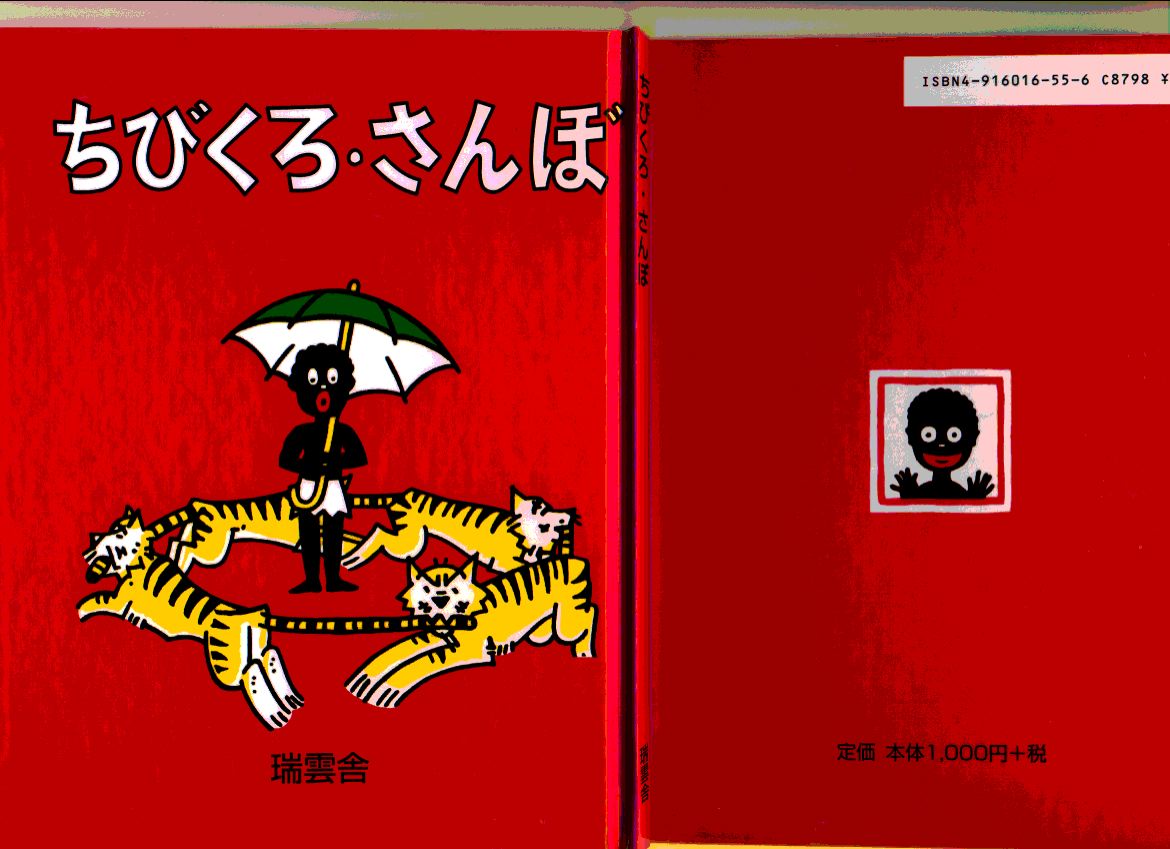
The story of little black sambo
(pros and cons about
The story of little black sambo(Japanese))

Ozuma a character in Star of Giants who was trained to be like a machine for baseball like the protagonist Hyuma.

Sammy Davis, Jr. was on the commercial (Japanese)------"Hmmmmm, Suntory!!!" was cool.

Immanuel(?)l boy was again on the TV commercial for Suntory.

Abdulaza(?) the butcher a professional wrestler.

Wicky-san , who used to interview with Japanese on the street in English on TV show to teach English

Martin Luther King, "I have a dream" ----pretty impressive.

Naomi Campbell I think she was on commercial too.

Joyner Olympic athlete

Willie Williams Karate player. He is tough.

Cromartie. a popular baseball player. He came back to Japan this year as a professional wrestler.

Ousmane Sankhon gajin tarent Sankhon with other gaitare

Black people on the TV show "this is weird, Japanese" defending Japan against Korea.

etc, .................


Eddie Murphy's 48 Hrs. Trading Places Beverly Hills Cop The Golden Child Beverly Hills Cop.Coming to America.

Lilies of the Field

Denzel Washington..................

And some Jazz players, Gospel singers, Rappers have "impacts" on some Japanese.

Shanels
was popular Japanese group singers disguised as black people.
I am not sure if Ganguro was trying to imitate black people, but Afro hair style was once popular in Japan.


I know some black people get discrimination in Japan because I know a black person who are married to Japanese woman says so.

ViolentAJ: "There is no real discrimination unless you are Korean or Black, maybe a bit against Chinese and Southeast Asians."

Dude. I don't know how long you spent in Japan, but white get the "warewarenihonjin", too. Not nearly as badly as black/extra-japanese-asian/etc., but it's still bad enough.

Posted by: James at March 1, 2007 06:59 AM

Nope. Blacks get at the most. All other races can get along except for Blacks. FACT.

Now I have no gripe against a man that does as he's told. But when he doesn't, the machine breaks down. When the machine breaks down, we break down.

"Killin'? What'dyou boys know about killin'?"

Posted by: ViolentAJ at March 1, 2007 02:21 PM

Hilarious. I'd say this was your best in a while.

Posted by: FatFree at March 1, 2007 09:45 PM

"All other races can get along except for Blacks. FACT."

No, you've been misinformed. It sucks for everyone, though as I said, it's worse for some. And it's exacerbated when you can't speak Japanese.

Posted by: James at March 2, 2007 10:43 AM

James, James, James. Use your supposed higher intelligence to figure it out for yourself.

Hint: You have 50 girlfriends simultaneously, while I am the first and only Black man to marry a Japanese woman (and her parents disPwned her).

Posted by: ViolentAJ at March 3, 2007 02:21 PMcomment section /Gaijin smash

(Hey I don't have any girlfriend, Does that mean Japanese are discriminated?)
comment section
see also Bobby/Gaijin smash

I don't know what it is like to live as a black person in the U.S.( I remember a black student in the class in the U.S. who said "others will never understand what it is like to be African American")
I know to some extent what it is like to live as a minority because I have lived in the U.S.

I don't know what prejudice, stereotype "white people" have against "black people"
I don't know what prejudice "black people" have about the prejudice people have toward "black people".
(My prejudice was that "black people" were inherently physically strong, cut out for an athlete---you can see how this stereotype was formed from my record of the encounter with "black people"---I corrected this stereotype when I saw some "black people" could not swim in the swimming pool.)

I know some Japanese politicians made some stupid racial statements against African-American people. (See the discussion on "the story of Sambo")
I don't know how they got the idea.

Japan has had the problem of discrimination against Koreans and Burakumin.
But the history of discrimination and struggle against it is different from that against black people in the U.S.

I know some kind of education is desperately in need in Japan to form the attitude against racism.


I might be wrong , but sometimes I feel some people bring in their heavy and complex bias and project it into Japanese society.

Monday, July 16, 2007

Truth and perspective

[T]ruth can be established only by repelling other claimants to that prestigious title; it's only 'truth within one of many possible alternative contexts. So it is achieved by excluding whatever fails to fit. Just as we say that some faces don't fit(don't suite a certain social context), so some historical data can't be made to fit the rule of evidence, or the linguistic usage, or the interpretative models that the prevailing discipline demands. What, for example, is actually allowed to count s 'evidence'? .....There's no room for everyone at the centre;so some viewpoints, some --interpretations, some versions of the past, must be marginalized. page 84 "What is history for? " Beverley Southgate
*1


One of the credits we should give to feminism is it has revealed the fact that what appeared to be the neutral view point turns out to be gender biased.*2
Of course truth should not be confused with the concept of truth nor with the manner in which it is valorized. (page 25 "What's the use of Truth?" Rorty/Engels,)
And truth is more than the matter of subjective and even intersubjective in a sense that the reality independent of an observer is conceivable. And sure there is objective knowledge in a sense that
a view or form of thought is more objective than another if it relies less on the specifics of the individual’s makeup and position in the world, or on the character of the particular type of creature he is. The wider the range of subjective types to which a form of understanding is accessible—the less it depends on specific subjective capacities—the more objective it is. A standpoint that is objective by comparison with the personal view of one individual may be subjective by comparison with a theoretical standpoint still farther out.The View from Nowhere

But it is less than objective in a sense the description*3 of such reality is inevitably associated with a speaker's perspective, and a specific frame of reference,(masculines view point, modern scientific view point, religious view point etc,.)
In this regard, it is interesting to note that even Heart Sutra,which claims to be
the perfect wisdom, is being seen from
a specific view point.
He looked down from on high, He beheld but five heaps, and He saw that in their own-being they were empty.....

But is the heart sutra true? I am inclined to to agree with Nāgārjuna that it is neither truth nor false. Though it gives the insight into the way we see ourselves and the world. It is not always the case that truth matters for life and there are something more important than the truth that influences our perception; the kind of vision that gives the one insight into life does not have to have truth value.

....................................................................................

*1
I hesitate to call some propositions to be partially true, because that presuppose the grand narrative by which you can put everything under your dominance in the form of knowledge.But truth makes sense only against a specific context and background. "(page 117 "The eye of spirit" Ken Wilber. )

*2 Related to this is the assertion that experience is always my experience.

Descartes said "I think, therefore I am, Kant said "The -I think- must be able to accompany all my representations" But their observation and analysis on the thought and representation merely shows It thinks, therefore, it exists.. In case of Depersonalization "disorder", the "patient" lose the sense of "I".
The sensation of "I" and "my" is so fundamental to our mode of our speech, institution, etc( Allan Watts "The book" page 12)
But isn't it that their experience reveals some important phase of our experience rather than "disorder"?
Isn't it the case that "I" and "my" are derivative from such primordial experience?
Isn't it just one aspect, one specific perspective of IT?
When somebody experiences the world filled with glory, isn't it the case there is no experiencer and experienced but just IT springs itself primordially as glory and then reflectively divide itself into experience and experienced?
Thouth this does not affect the discussion on the truth above, it is consistent with the view above.

*3
Truth
Rorty on truth
It is not the case I agree with Rorty on truth on every point. but I sympathise with him in that I feel the truth qua truth is a boring subject to delve into.

Resolution 121 ---How to accept an offensive remark.

The resolution 121 would be offensive for many Japanese, disappointing for pro-American Japanese. It is like Japan demanding the apology for the U.S.'s interventions of Philippines. Latin America, Russia.

But one good way to take an offensive remark is to accept the fact that that is the way he is and think that you can not change it, so let's get down to the real business with him, disregarding the remark.

After all----

Patrick Henry "ordered "diligent patrols " to keep Virginia slaves from accepting the British offer of freedom to those who would join their side," exclaiming "Would anyone believe I am the master of slaves of my own purchase, eight months after he gave the speech "Give me liberty or give me death" . (page 146Lies my teacher told me James W. Loewn.)

Thomas Jefferson had 175 slaves at the time he wrote "everyone has an equal right to "Life, Liberty, and the pursuit of Happiness".(page 146)

Woodrow Wilson advocated "" 'Self determination' is not a mere phrase," Wilson told Congress; "it is an imperative principle of action which statesmen will henceforth ignore at their peril." Later he referred to "the free self - determination of nations upon which all the modern world insists." while rejecting Ho Chi Mins's appeal
to him at Versatile for self-determination and letting France retained control of Indochina, vetoing a clause on racial equality in the Covenant of the League of Nations proposed by Japan.

No wonder the U.S. accuses Japan who has made several apologies, without facing the fact that the U.S. has committed the same kind of crimes in the backyard---That is the way she has been.

update:A commenter Matt suggested I was generalizing. I had no such intention, but, I should have been clearer. I should have said here some of lawmakers accuse....instead of the U.S. here. It was misleading. I apologize.


In addition, one might console himself, uttering "syouganai, it is all politics" in the spirit of Kyuma, taking note of the fact that not all Americans are like that.

The exciting South Korean protester

What is your favorite type of South Korean protester?
魚拓
via Japan Probe

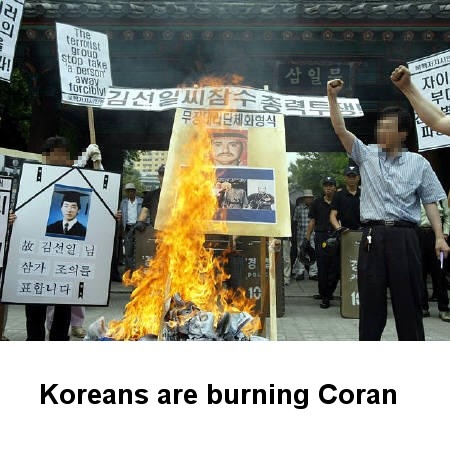
Unfortunately the site missed the historic South Korean protest
against the terrorist.


South Koreans are burning Koran, the holy religious text of Islam, protesting against the terrorists.

And of course you can not miss the site that thoughtfully analyze the exciting South Korean protest against U.S.

It seems some of South Koreans love tarnishing the holy symbol of any counries.

China's dipolomacy

US food companies hit by China ban
“China needs to avoid taking steps that appear to be simple retaliation and both sides need to make a big effort not to politicise the problem,” said Andy Rothman, China macro-strategist for CLSA Asia-Pacific Markets. “Most signs indicate the Chinese government is taking this issue very seriously. China’s food safety regulations are basically a mirror image of those in the US. It is just a matter of getting enforcement up to snuff.”

China heats up food battle
In Role Reversal, China Blocks Some U.S. Meat

Let's see how it will turn out and learn from Chinese diplomacy.

Sunday, July 15, 2007

The national flag of Japan was whitewashed in Korea

UPDATE
It seems it was
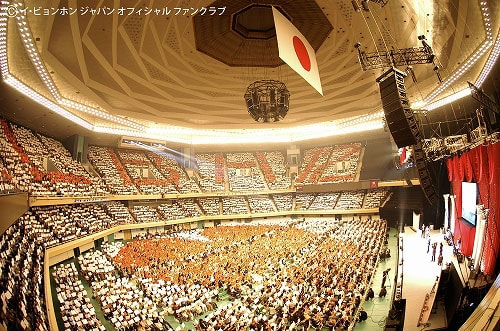
the fan club of the singer that doctored the photo and sendt it to the Korean media. The question remains why it did such a thing, though.


There was a birthday party for a Korean singer at Budoukan on July 12th, Japanese media and Korean media reported it. The top is from Japanese media and the below is from Korea media.


----immature----

(It seems Korean media has changed the photo, but there is no denying the fact because there are several records.)


via 博士の独り言

Debito all too Debito (2)

Tokyo Dist. Court rules testimony invalid due to witness being African....a witness’s testimony was inadmissible because he is African. Debito


Tokyo district court
「(前略)証人は、徒前から原告と面識があり、本件骨折後も原告を病院に見舞っているなどかなり親しいことがうかがわれている友人であり、歌舞伎町の黒人コミュニティーの仲間であったこと等を照らすと、証人フランシスの供述は、目撃証言として客観性を有するものとはいえず、そのまま信用する到底できない。」(判決文19ページ)page 19

quick translation
The witness was acquainted with the plaintiff and he visited the hospital after the incident to see the plaintiff etc,. ; he was considerably close friend of the plaintiff. They were mates among the black community at Kabukicho. It is far from plausible to give full credibility to the witness's --- Francis's testimony as it is as being objective


In a nutshell, the testimony was regarded as prejudiced, not highly reliable not because the witness was black, but because the witness was considerably a close mate of the plaintiff.

(Might it be that Debit is projecting his own white man's prejudice into Japanese society?---not that every white man have such prejudice---that's far from truth---- but there are some cases where people say one thing, and mean another unconsciously)

Note also there is a difference between admissibility(証拠能力) and reliability(証拠力、証拠価値).If the document is not admissible, a judge can not read the document. After the admissible documents and testimonies are presented in the court, a judge weighs the reliability.

Note further that Debit himself quoted the ruling from Tokyo district court;He referred to it to back up his argument, but he didn't translate it , for some reason, for the English readership to judge the case.


Again there is nothing wrong with helping the minority;it should be encouraged, but there is something wrong in turning everything into racial issue.

On a side note, I wonder why Debito didn't turn the resolution 121 into racial issue;it smells like much racial issue. The U.S. blaming Japan who apologized several times for the comfort women system while the U.S. having engaged in the the same kind of crime in the backyard in Korea and in Japan and yet she hasn't issue any apology.

Debito all too Debito

Comfort women:Japanese prostitute's job application found in China


In this picture taken recently, the paper on the left carries the insurer's signature and is sealed by the police station of the Republic of China, the prevailing administration between 1912 and 1949; while on the right piece, the applicant fills the blanks with her name, nationality, age, address and justification for wanting to become a prostitute, as well as proof of having volunteered to do so. A black-and-white photo of the prostitute-to-be is also pasted under the characters "from Tianjin police station to Tianjin city government". [Xinhua]


魚拓
To me, it t shows prositutes were legalized, and basically the prositutes were recruited on a volountary basis.

via Liberal Japan

Saturday, July 14, 2007

Let's throw cow manure

Members of civic groups opposed to the sale of U.S. beef throw cow manure inside the Lotte Mart Sangmu branch in Gwangju yesterday. Newsis, which transmitted the photo, blurred their faces. Lotte Mart introduced U.S. beef yesterday, the first time a nationwide supermarket has sold it in more than three years. [NEWSIS]

joongang/July 14, 2007


Creative protest---


DEBITO, all too DEBITO

see also Nationality clause
First, excellent video by Eric Kalmus on the irony of Japan’s child abductions (in the face of all the international rules against this, not to mention the political capital gained by the GOJ over the DPRK abductions of Japanese) after the breakdown of international marriages.


This is the way Debito pisses people off.
The basic idea is good, or even for those opposing the idea, the basic contention would deserve reasonable debates. But when put in Debito's way, it just pisses people off--- make some Japanese angry; How can you equal abduction by DPRK with that by one of the parents?
Who abducted a kid? government?
How did agent kidnapped them? by blindfolding and by putting a gag in their mouth?
Does government cover it up?
Does government prevent the parent from meeting kids?
(I even feel some oddity to use "abduction" for the case of a child who are living with one of the parents. To abduct means "to force someone to go somewhere with you, often using threats or violence". But I guess no force was used to take the child away. Traditionally when the child is taken away without a consent of the parents, it is abduction, but the case is not abduction in a sense that she/he is with one of their parent, but it is abduction in a sense that it is against one of the parents' will.I guess Hague conference used it in the latter sense.)

Japan

Reservation:

"In applying paragraph (c) of article 37 of the Convention on the Rights of the Child, Japan reserves the right not to be bound by the provision in its second sentence, that is, `every child deprived of liberty shall be separated from adults unless it is considered in the child's best interest not to do so', considering the fact that in Japan as regards persons deprived of liberty, those who are below twenty years of age are to be generally separated from those who are of twenty years of age and over under its national law."

Declarations:

1. The Government of Japan declares that paragraph 1 of article 9 of the Convention on the Rights of the Child be interpreted not to apply to a case where a child is separated from his or her parents as a result of deportation in accordance with its immigration law.

2. The Government of Japan declares further that the obligation to deal with applications to enter or leave a State Party for the purpose of family re-unification `in a positive, humane and expeditious manner' provided for in paragraph 1 of article 10 of the Convention on the Rights of the Child be interpreted not to affect the outcome of such applications."Declarations and Reservations to the Convention on the Rights of the Child

第一回報告書審査 児童の権利委員会からの質問に対する回答

As the State Department of the US points out, the basic problem, it seems to me, is that "compliance with Family Court rulings is essentially voluntary, which renders any ruling unenforceable unless both parents agree"
(Family court decides, but the there is no law to enforce it when one of the parents disagree. So the only way is through habeas corpus proceedings in the court. And in Japanese court, Basically and very roughly as far as I read the wiki article(Japanese) if you hold custody and it is not evident that the child's living condition is not against his/her best interest as compared with that under the other party, you can keep the child.If you don't hold custody, you can not keep him/her unless it is evident the guardian will be abusing him/her.


As fas as people relate this issue with abduction by DPRK, there is no way to win the heart of Japanese on this issue.

I am getting to see Debito method. He finds some articles in English that blame Japan for abusing human rights. Without checking facts, and giving no considerations to pros and cons, He picks them up and says "Hi blog, this is the issue Japan is facing. See, I am working hard for human right. " "I am Japanese but I am writing only in English because I want English speaking people to know it. " (Is that because Gaijin smash work here? ---few Japanese are aware of what he is doing. And when he is quoting Japanese articles, Japanese have already known it.) "See, I have made family mart stop selling offensive magazine. (Wasn't that Japan Probe that actually worked hard for it?) "I don't like the way Tony", who in Debito's words, earn "a millionaire’s income from the manga", " works for civil rights."

Now I appreciate Tony or Debit who works for human rights. But I would appreciate more if he worked a bit harder trying to give balanced articles in a way that does not sensationalize the issue, so that the ultimate purpose of his project is much easier for Japanese to accept.


.....................................................................................
the Permanent Bureau of the Hague Conference/The Child Abduction Section
国際結婚の結末
Parental Abduction in Japan
親権
調停でも裁判でも親権を決定するのは裁判所自身ということになります
International Parental Child Abduction
米国務省が証明する日本家族法の問題US State Department evidence about family law problems in Japan

Friday, July 13, 2007

Screening history textbook in Japan and in the U.S.: the mass suicide at Okinawa and the massacre at Vietnam

NAHA--The Okinawa prefectural assembly Friday unanimously adopted a statement urging Tokyo to retract its decision to omit from history textbooks the Japanese military's involvement in mass civilian suicides during the Battle of Okinawa.Asahi/06/23/2007

The Imperial Japanese Army forced the suicides on local residents.
Pros: Okinawa times wrote in 1950 that a military officer ordered to commit mass suicide and Oe kenzaburo, noble prize winner, quoted it in his book and he demonised the military officer. Sakei web(魚拓)Japanese
Sankei web(魚拓)Japanese

Cons:But it turned out that there was no such order and the story was made up in order to give the residents pension; No pension would have been distributed if the death had been due to suicide to avoid captured as POW, but being killed by order would have been qualified as killed in action and thereby qualified to receive pension. (There was a testimony)
沖縄・渡嘉敷島の集団自決(魚拓)Japanese
"Civilians were “driven into mass suicide" would be an appropriate description.

Pros:But it is still true that hand grenades were distributed to the local residents, they were strictly ordered not to be captured by U.S.forces: They were told they would be raped, or killed if captured and were told not to live in shame.
And the Japanese at the times were told that ‘If the worst happens, kill yourselves.That adds up to ordering to kill yourself.
Mainich(魚拓)Japanese
「集団自決」について(魚拓)Japanese


ConsThe grenades were distributed to defencive soldiers who had been mobilized from local residents since they were the regular army. In their panic, they handed the grenades to their families. In hindsight, it was a mistake that the grenades was distributed to soldiers who were not trained sufficiently.
沖縄・渡嘉敷島の集団自決(魚拓)Japanese


References in English:

Japan’s Education Ministry edits textbook passages on the Battle of Okinawa/Japan probe
Officials seek to homogenize Japan by sanitizing Okinawa history(Liberal Japan)
(But I have a feeling that some of Egnlish articles in the newspapers do not exactly convey what has been told by witnesses.)

Do we have to decide which interpretation is "the right"?

History is furious debate informed by evidence and reason. page 16 "Lies my teacher told me/ James W. Loewen


If so, why can't government present both interpretations to the students? ---That makes history more exciting and I wanted to have been taught in that way.

It seems that there is the same kind of problem in American history textbooks, according to Loewen. For instance, as for the description of the massacre in Vietnam,

My Lai was the most famous instance of what John Kerry, formerly of Vietnam Veterans Against the War, now a U.S. senator, called "not isolated incidents but crimes committed on a day-to-day basis with the full awareness of officers at all levels of common."...."Over 150 honorably discharged and many very highly decorated veterans testified to war crimes committed in South Asia". He went on to retell how American troops "had personally raped, cut off ears, cut off heads , tapes wires from portable telephones to human genitals and turned up the power, cut off limbs , blown up bodies, randomly shot at civilians, razed villages in fashion reminiscent of Genghis Khan, shot cattle and dogs for fun, poisoned food stocks, and generally ravaged the countryside of South Vietnam." All this was "in addition to the normal ravage of war." page 245...Indeed, no book includes any photograph of any destruction, even of legitimate targets, caused by our side. Only Discovering American History, ...treats the My Lai massacre as anything but an isolated incident. In addition to leaving students ignorant of the history of the war, the silence of other textbooks on this matter also makes antiwar movement incomprehensible. page 246


And as for the cause of Vietnam War,

Some people still argue that the United States fought in Vietnam to secure access to the country's valuable natural resource. Others claim that we fought to bring democracy to Vietnam's people . Perhaps ore common are analyses of our internal politics:Democratic President Kennedy and Johnson, having seen how Republican castigated Truman for "losing China", did not want to be seen as "losing" Vietnam. Another interpretation bring forth the domino theory....Other historians take a longer view, arguing that our intervention in Vietnam derives from a cultural pattern of racism and imperialism that began with the first Indian war in Virginia in 1622....They point out that GI's in Vietnam collected and displayed Vietnamese ears just as British colonists in North America collected and displayed Indian scalps. A final view mi hgt be that there was no clear cause and certainly no clear purpose, that we blundered into the was because no subsequent administration had the courage to undo our 1946 mistake of opposing a popular Independence movement. "The fundamental blunder with respect to Indochina was made after 1945", wrote Secretary of State John Foster Dulles, when "our Government allowed itself to be persuaded " by the French and British "to restore France's colonial position in Indochina"
Perhaps the seeds of America's tragic involvement with Vietnam were sown at Versailles in 1918, when Woodrow Wilson failed to hear Ho Chi Mnh's plea for his country's independence. page 248

Textbook authors need not choose sides, ...They could present interpretations , along with overview of the historical support for each, and invite students to come to their own conclusion. Such challenges are not the textbook authors' style, however. They seem compelled to present the "right" answer to all questions, even unresolved controversies. page 249


The U.S. has been a good teacher. Let's learn the lesson from her.

All the authors of history textbook need to keep in mind, when writing the dark side of our hisotry, is that
textbooks should show that neither morality nor immorality can simply be conferred upon us by history. page 70