Monday, April 24, 2006

Japan/the U.S.

Japan has offered to pay $2.8 billion. It would also finance loans to the United States worth $3.3 billion, the remainder of its $6.1 billion share. Japan would shoulder 59 percent of the realignment cost

The United States had proposed in an earlier round of negotiations that Japan pay $7.5 billion, or 75 percent, of the cost to relocate Marines. Japan had said it would pay about one-third of that amount.link

75%払えというの25%なら払うというのの中間なら50%くらいですが、そうではなく、60%で落ち着いたようです。なんだかよくわからん。

update
"Now that we have a final agreement on the realignment of the U.S. military presence (in Japan), I think the foundation for our alliance in the next 20 years is gradually being put in place," Nukaga said

On sharing the cost to relocate U.S. Marines, Chief Cabinet Secretary Shinzo Abe said Monday that Japan agreed to pay almost three-fifths of the cost in order to expedite the reduction of the burdens on the host communities in Okinawa

While Japan has been paying for the construction of U.S. bases in Japan and some other expenses for the stationing of the U.S. troops, it is unprecedented for it to fund such facilities in U.S. territory, a senior Foreign Ministry official said Monday on condition of anonymity.Tuesday April 25,kyodo

同盟関係の絆を深めること、沖縄の負担軽減ということはわかるがいまいち腑に落ちないね。

Sunday, April 23, 2006

Japan/world/

TOKYO - In the latest in a series of initiatives aimed at elevating its international status, a group of Japanese lawmakers is preparing a new landmark law to promote its crusade for the preservation of valuable cultural assets abroad.


For example, two giant statutes of the Buddha at Bamiyan in Afghanistan - dating back to the 6th century - were destroyed bythe Taliban in March 2001. And the National Museum of Iraq was looted as the country was thrown into confusion after the 2003 invasion
atimes

日本が世界へ貢献するため、世界の文化遺産の修復などの作業ができるように法律を整備するという報道です。現状の平和憲法の制限をうけて軍事的な貢献はできなのですから、こうした非軍事的な貢献が必要です。まして、、非個性化あるいは、ある文化基準のおしつけになりがちなグローバリゼイションのただ中にあって、ある文化遺産を修復することは、その文化の個性を尊重することですからとてもいいこだと思います。ぜひ成立させていただきたい。

China/Japan/Friendship

Japanese NGO donates insect-killing lamps to NW China province
The lamps, valued at more than 100,000 yuan (12,500 U.S. dollars), will be used in Yangxian County, a large habitat and reserve for the red ibis, an endangered bird under state protection, the Xi'an Evening News reported.people's daily

希少な鳥を保護するため、農薬をつかえない地域へ、日本のNGOが殺虫ランプ?を寄付するそうです。ギスギスした関係が続く中心温まる話しです。
people's dailyが報道しているところをみると彼地でも日本に対する対応の変化があったと考えてよいのでしょうか?単なる希望的観測?

Japan/Illegal immigrant

GLOBALISATION: The plight of illegal immigrants in JapanApril 22, 2006Daily Times

日本における不法移民の問題です。日本だけの問題ではありません。
The challenges so familiar to officials in the US, Europe and Australia are thus relatively new in Japan


1)経済的に安価な労働力が必要である。
2)不法移民は安価な給与で働く。
3)その一方で、不法移民は、社会保険、企業の不正に対して訴える道がない。
4)その結果、不法移民の人権が侵害される。
ではどうするか?
あ)すでにいる不法移民を合法化する。
しかし、日本は急速な異文化の受け入れの準備ができているかどうか?
い)不法なまま社会保障、労働基本権などを保護する。
しかし、それでは結局不法な滞在を黙認することになる。
う)不法移民を雇用している企業を罰する。
しかし、これは企業の死活につながる場合も考えられます。
雇用の必要性が続くのであれば、あ)の路線で制限的に合法化して、その基準を満たさない滞在者を雇用している企業を罰する、つまりう)を併用するというのはどうでしょうか?
それにしても、健康問題など緊急に援助が必要な場合は、不法滞在者でも気軽に相談できる機関が必要だと思います。

ーーー難しい問題です

Japan/Investment

Wondering where Bill Gates, George Soros and the Rockefellers are putting their money these days?

More respondents picked Japan as one of these three, with India running a close second. The United States ranked third, with Eastern Europe - the emerging markets of Poland, Hungary and the Czech Republic, among others - following closely behind. April 22, 2006

世界の超リッチマンたちは何処に投資しているか?---日本だそうです。
でも、私の財布の中身は減るばかり。

Saturday, April 22, 2006

Japan/Korea/takeshima


A lot of pro-Korean commentators say that they believe Takshiima-Dokdo belongs to Korea, in view of history and in view of international law.
What is strange and funny is that none of them recommend Korean people to send it to
International Court of Justice.

If historically and legally the island belongs to Korea,Korean people lose nothing by sending it to I.C.J.

What is I.C.J. for? ----the peaceful settle of the internatinal conflicts.

Japan want it.
Korea rejected it.

Instead they are talking about agressive measures, they are talking about "killing'em all"

Which countries learned from the past?


But anyway, it seems that they agreed.


Japan agreed Saturday to withdraw its plan to conduct a maritime survey near a group of disputed islets in the Sea of Japan, a Japanese official said.

South Korea, in turn, agreed to cancel plans to name seafloor topography near the islets at an international conference scheduled for June in Germany, the official said.


South Korea turned down Japan's proposal to create a system to give each other advance notice when one of them plans to conduct such a maritime survey, according to the official.kyodo


Well,the party is over ....for now.

China/the media

Chinese media whitewashes Hu visittaipeiApri 22

中国のメディアは宝輪功のメンバーが叫びや、詰問についてすべてカットだとそうです。
報道の自由がないところの国民は不幸です。

Japan/Indonesia

インドネシア大使が自国の若者向けに日本について本を出版したそうです。そのなかで日本が米国べったりであることに懸念を表明しつつ次のようなことを述べておられるそうです。
Irsan, whose book devote many pages to Japan's colonial rule of Indonesia during World War II, said he felt very sad during his visit to Yasukuni Shrine as he learned that the shrine's war museum says Indonesia became independent in 1949.

"Many Japanese people do know that Indonesia became independent on Aug. 17, 1945. Therefore, it is beyond my understanding why (the shrine) has made such a mistake," Apr. 22, 2006Yomiuri

靖国神社に訪問したときそこで、インドネシアの独立が1949年であると書かれているのを読んで悲しみを覚えた、日本人はインドネシアの独立は1945年と知っているはずじゃないか、と。どういことでしょうか?
Though Japan captured Java by March 1942, it initially could not find any national leader willing to collaborate with the Japanese government against the Dutch. Eventually the Japanese commander ordered Sukarno’s release from his prison island, and in July 1942, Sukarno arrived in Jakarta. Sukarno and his colleagues collaborated with the Japanese occupiers. In 1945, with the war drawing to a close, Sukarno was made aware of an opportunity to declare independence. In response to lobbying, Japan agreed to allow Sukarno to establish a committee to plan for independence. Sukarno and Mohammad Hatta declared independence on 17 August.wiki

日本がスカルノと協力してインドネシアが独立したのが1945年。
Following the defeat of Japan in the World War, the Netherlands' Army, at first backed by the British, attempted to reoccupy their former East Indies colonies. Indonesia's war for independence lasted from 1945 until 27 December 1949

It was not until 16 August 2005 that the Dutch government recognized 1945 as the country's year of independence and expressed regrets over the Indonesian deaths caused by the Netherlands' Army.

wiki

2005年になってようやくオランダは1945年が独立年であり、オランダ軍によって亡くなった方々に弔意を表した、と。
靖国も靖国なら、2005年になってようやく認めたオランダもオランダだよね。

Remember flying tigers!----???


FIRST COMBAT

The Third A.V.G. squadron moved to Rangoon on December 12, 1941, to join the R.A.F. in the defense of Rangoon. The First and Second squadrons flew from Toungoo to Kunming on the afternoon of the 18th. The first combat for the A.V.G. occurred over southern Yunnan Province on December 20, 1941. In their first combat, a combination of the First and Second Squadrons, shot down nine out of ten Japanese bombers with a loss of one A.V.G. aircraft. The second engagement brought the Third Squadron onto action over Rangoon on December 23, with the R.A.F. flying beside the Tigers. The total haul of Japs was six bombers and four fighters. The R.A.F. lost five planes and pilots and the A.V.G. lost four planes and two pilots.

Then, on Christmas Day, two waves totaling 80 Jap bombers and 48 fighters hit Rangoon. The A.V.G. knocked down 23 of them, the biggest victory of the war, with six more Jap planes believed shot down over the Gulf of Martaban. The A.V.G. suffered not the loss of a single plane.

The 28th brought another heavy enemy attack - 20 bombers and 25 fighters. The A.V.G. got 10 of them with no losses.

The next day, the 29th, the Japs threw 40 bombers and 20 fighters against the Tigers who scored 18 kills with a loss of only a single aircraft.

Now it was the day of New Year's Eve but it dawned with no let up in the Jap assault. 80 planes crowding the skies over Rangoon. The Tigers shot down 15 without the loss of a single aircraft.

In 11 days of fighting, the A.V.G. had officially knocked 75 enemy aircraft out of the skies with an undetermined number of probable kills such as the losses the Japs suffered over the Gulf of Martaban. The A.V.G. losses were two pilots and six aircraft.

Early in January, the Rangoon defense was reinforced by eight planes from the First Squadron and the A.V.G. began their first strafing of the war. Hitting the Jap air base in Thailand, they wiped out a dozen planes on the ground. On January 13, the remainder of the First Squadron joined the other A.V.G. forces at Rangoon and there followed a series of raids on Jap air bases. Ten days later, January 23, after a series of engagements over Kunming and Rangoon, the Japes attacked Rangoon in force again, 72 planes appearing there and the A.V.G. got 21 of them with the loss of only one American pilot. Air battles continued over Rangoon until it finally fell to enemy ground forces at the end of February. During this time, in one strafing raid in Thailand, the A.V.G. knocked out upwards of 60 enemy aircraft on the ground, the biggest ground victory of the war. But advancing Jap ground forces slowly drove the A.V.G. to bases at Magwe in Burma and eventually into the interior of China.

There, the Tigers continued to carry out their final missions, supporting the Chinese ground forces on both eastern and western fronts as well as defending Chinese cities against attacks by the Japanese Air Force.The official home page of "The Flying Tigers"


The AVG was largely the creation of Claire Chennault, retired U.S. Army Air Corps captain who had become military aviation advisor to Chinese generalissimo Chiang Kai-shek in the Sino-Japanese War. On occasion Chennault may have piloted a plane himself, though stories that he was a combat ace are probably apocryphal. Due to poor fighter material, results were not impressive, and when Russian air units were withdrawn from China in 1940, Chiang asked for American squadrons to replace them.
The clandestine operation was largely organized by Lauchlin Currie, a young economist in the White House, and by Roosevelt intimate Thomas G. Corcoran. (Currie's assistant was John King Fairbank, who later became America's preeminent Asian scholar.) The AVG, financing was handled by China Defense Supplies which was largely Tommy Corcoran's creation, with funding provided by the U.S. government; purchases were then made by the Chinese under the "Cash and Carry" provision of the Neutrality Act of 1939.


The pilots were either currently serving in American armed services or reserve officers; contrary to legend, none were recruited from the ranks of civilian transport pilots or barnstormers. Most histories of the Flying Tigers say that on April 15, 1941 President Roosevelt signed a secret executive order authorising Army Reservists on active duty to resign from the Army Air Corps in order to sign up for the AVG,[1] however Flying Tigers historian Daniel Ford could not find evidence that such an order was ever published[2]. Ford states that the State department in fact blocked the issuing of a passport to a pilot who had a history of volunteering for such service[3], something that would go against the spirit of such order.

The pilots who volunteered were discharged from the American armed services, to fly and fight as mercenaries for the Republic of China Air Force[4]. They were officially employees of a private military contractor, the Central Aircraft Manufacturing Company, which employed them for "training and instruction," and which paid them $600 a month for pilot officer, $675 a month for flight leader (such as Gregory Boyington), and $750 for Squadron leader, though no pilot was recruited at this level. They were orally promised an additional $500 for each enemy aircraft shot down, a promise that was later confirmed by Madame Chiang Kai-shek, who also extended it to aircraft destroyed on the ground.wiki


So in substance, the U.S. attacked Japan without declaration of the War?

Secretary of War Henry S.Stimson's diary of November25, 1941, summarized President Roosevelt to the effect that "the question was how we manuver them [the Japanese] into the postion of firing the first shot without allowing too much danger ourselves"[1] ,Coupled with the fact that there is a good reason to believe that Roosevelt knew Japan would attack Peal Harbor,I think Roosevelt was a smart guy!!!

UPDATE
Of course the law of neutrality does not preclude any government from taking part in a war if it sees fit to do so. It merely requires the observance of candor and decency in international dealings, by inhibiting acts of war under the guise of neutrality. From the elementary principles of international law it necessarily follows that if a government bans the shipment of arms and munitions of war to one of the parties to an armed conflict and permits it to the other, it intervenes in a conflict in a military sense and makes itself a party to a war, whether declared or undeclared.

The fact that America was helping China in all possible ways during Sino-Japanese hostilities would thus be a pertinent consideration in determining the character of Japan's subsequent action against the USA. The prosecution admits that the United States rendered aid economically and in the form of war materials to China to a degree unprecedented between non-belligerent powers and that some of her nationals fought with the Chinese against the aggression of JapanRadhabinod Pal


[1]p662 The making of Modern Japan


* Charles Bond & Terry Anderson - A Flying Tiger's Diary ISBN 0890961786
* Martha Byrd - Chennault: Giving Wings to the Tiger ISBN 0817303227
* Daniel Ford - Flying Tigers: Claire Chennault and the American Volunteer Group ISBN 1560985410
* Frank S. Losonsky - Flying Tiger: A Crew Chief's Story: The War Diary of an AVG Crew Chief ISBN 0764300458
* Frank J. Olynyk - AVG & USAAF (China-Burma-India Theater) Credits for Destruction of Enemy Aircraft in Air to Air Combat, World War 2. Privately published, 1986.
* Robert Lee Scott Jr. - Flying Tiger: Chennault of China ISBN 0837167744
* Erik Shilling - Destiny: A Flying Tigers Rendezvous With Fate ISBN 1882463021
* John Toland - Flying Tigers ISBN 0394904052
* Ralph Vartabedian. 'One Last Combat Victory' Los Angeles Times, 6 July 1991. pg.1

Douglas A. MacArthur testified


There is practically nothing indigenous to Japan except the silk worm.
They lack cotton, thy lack wool, they lack petroleum products they lack tin. they lack rubber, they lack a great many other things, all of which was in the Asian basin.
They feared that if those supplies were cut off, there would be 10 to 12 million people unoccupied in Japan.
Their purpose, therefore, in going to war was largely dictated by security.
----Douglas A. MacArthur in 1951----


 (聴聞会の正式な題は「極東の軍事情勢とマッカーサーの解任」(Inquiry Into the Military Situation in the Far East and the Facts Surrounding the Relief of General of the Army Douglas MacArthur from his Assignments in that Area)である。米国立公文書館の上院文書RG46に全文がある。マッカーサー米議会証言録(1)
一九五一年五月三日~五日、米上院軍事・外交合同委員会聴聞会より

(当該文章は近現代史より引用

Friday, April 21, 2006

Korea/Culture


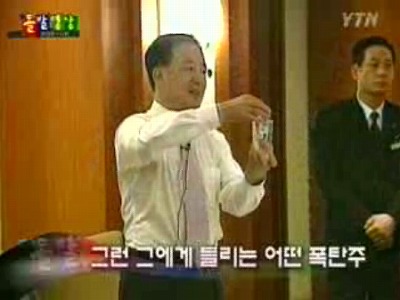
"These days, deiplomatic frictions is increasing because Japan tresspassed the outskirt of Dokdo.
We'll change the the topic of the coverage.
We'are going to shoot the expresson of Japanese ambassadar.
Well, it seems he does not like the bomb liquor."

-------------------------------------------------------

"The way the bubble splites open suddely resembles the way A-bomb formed the mumushroom at Hirosima when it exploded."Hahahaha!!!!
"So we can also call it "A-bomb beer.Haahaha!!!!

----------------------------------------------------------

The Japanese ambasadar Oshima!!!


ーーーーーーーーーーーーーーーーーーーーーーーーーーーーー


You can download this from hereorhere

HIs intention is evil.
HIs metaphor is evil.
This program is evil.
I wonder if they know what they are doing.
If they know, ・・・・・・
If they don't know,・・・・・

Follow Up

The event was organized by the Corea Image Communication Institute to provide foreigners with an insight into Korean culture at its most immediateChosun libo
by Eroll
Well if it to provide foreigners with an insight into Korean culture at its immediate, sure, people got the insight into Korean culture all right.

Japan/Korea/takeshima

Marmot hallのコメントセクションで眼についたものを掲載しましょう。
Serious question: can someone explain to me how Japan sending a ship to the disputed EEZ area is a “justification of its past invasions,” as Roh is calling it. I don’t get the logic.

The Japanese claim to Tokto goes back to 1905, citing terra nullius, even though Korea had made a prior claim on the island, and Japan had acknowledged the claim in the 19th century. Japan claimed Tokto in 1905 at a time when, by Tokyo’s design through the Russo-Japanese War and the forcing of Korea to relinquish control of foreign affairs to Tokyo (that’s the history of aggression part), there was little Korea could do about this issue.

Furthermore, the treaty Japan signed at the end of World War II called for it to give up any claims on territory gained through its imperial expansionism.

Thus, any Japanese claim today on Tokto or the surrounding EEZ is, in Seoul’s view, based on Japan’s past imperial aggression. It would be no different from if Tokyo were to send its Coast Guard into the EEZ created by Chejudo or Ullŭngdo.kushibo

なんで調査船を送るのが日本の過去の正当化になるのか、という質問に、それはだね、竹島を日本編入宣言したのは1905年で、その年は外交権を韓国は日本に奪われているからね、というような趣旨。
しかし、まず、外交権を日本に譲渡したのは条約に基づくものですね。
で、仮に、それが無効だとしても、竹島が日本の領土だという主張はそれ以前からあるから1905年とはそもそも関係ないわけです。


Korea and Japan both claim Dokdo/Takeshima, but Japan has not been threatening diplomatic war, canceling summit meetings, printing Takeshima stamps, or sending a dozen ships and planes out to prevent a survey of the disputed area. Korea has been doing all of that and more.

Almost all countries have shines to people who other people consider evil. The United States honors people who are considered war criminals by other nations. China honors Mao, who killed tens of millions. North Korea honors Kim Il-sung, who killed millions of Koreans. South Korea honors people who the Japanese consider as terrorists, yet it is only Korea and China who are making a big deal out of the Japanese shine visits. The United States, the Philippines, and other countries have not been threatening diplomatic war or canceling summit meetings.

You are the one with blinders on, Kushibo, if you cannot see how Korea overreacts to almost everything that Japan does. Even you BBC article said that Koizumi, not Roh, spent months trying to get Japan-Korea relations back on track. However, no matter what Koizumi does, Koreans will find something to whine about. Koreans love to paint themselves as the victim, and they love to make Japan, the US military, and Apollo Ohno the victimizer.

I cracked up when I read that Roh is considering giving up using “quiet diplomacy” with Japan. Quiet diplomacy? When has Roh ever used quiet diplomacy with Japan? The only kind of diplomacy I have seen Roh use is “hissy-fit diplomacy.”gbeaver


非常に全うな意見ではないですか?竹島問題で日本は外交戦争を仕掛けているわけでもない。
どの国でも他国が悪人とみなすような人をまつる神社はあるのであり、それをとやかく言っているのは中国韓国だけだ、と


Of course, we wouldnt be in this situation if the Korean government had kept its promises about the fishing rights in the first place.Shakuhachi

そもそも漁業協定を韓国が破ることがなければこうした問題が起きなかった。これが多分一番の基本であり、原点ですね。


Do you also believe that countries with maps saying “Sea of Japan” are attempting to “distort history”?

Kushibo wrote: “Korea is in no position but to send out ships and planes to prevent an unwanted incursion into an area it occupies.”

Gerry Writes: Wrong, Kushibo. There are a few things that Korea could do instead of sending out a eighteen or more ships and planes to stop two survey vessels in the area claimed by both Korea and Japan. For one, Korea could simply do what Japan did when Korea surveyed the same area without getting Japan’s permission, which is they could simply protest the survey without using force. Afterall, the two Japanese survey vessels are not going to the area to invade Dokdo, as the Korean media seems to believe.

Yasukuni is not a shrine to Japanese war criminals. It is a shrine to Japan’s war dead, and the Japanese prime minister does not go to the shrine to pay homage to Japanese war criminals. He has said repeatedly that he goes there to pray for peace and the souls of all the dead. Korea, on the other hand, intentionally pays homage to terrorists.

Kushibo Wrote: “Although they are mass killers, that domestic matter is not analogous to the situation at hand.”

Gerry Writes: Aren’t Japanese textbooks and shrine visits also a “domestic matter”? Afterall, Japan is not declaring diplomatic war on Korea for its distorted textbooks and shrine visits.

Kushibo Wrote: “The Japanese claim to Tokto goes back to 1905, citing terra nullius, even though Korea had made a prior claim on the island, and Japan had acknowledged the claim in the 19th century.”

Gerry Writes: You are wrong again, Kushibo. Korea never claimed Dokdo/Takeshima before 1905, and Japan never acknowledged any such fictitious claim.Gbeaver


You are wrong about Yasukuni. It is not a shrine to Japan’s war dead. It is a shrine to those who gave their lives for the Japanese emperor. The two are not the same (except to Japan’s right wing).

And there is a reason that PMs before Koizumi did not go there. Regardless of whether Koizumi is right in doing to Yasukuni, I think it is worth noting that many Japanese are uncomfortable with the idea, too.Haisan

上記gbeaver氏に対する反論ですが、靖国は天皇のために犠牲になった人への神社だ、と。ーーーどうでしょうか?先日行ったときにはそうした印象はなかったですね。自衛官がまつられる場合天皇の犠牲になった人とは言い難いでしょう。むしろ日本の戦争で犠牲になったものへの追悼というほうが正確ではないでしょうか。それと小泉以前の首相はほとんどみな参拝してますね。
他のところで天皇が行かなくなったことを靖国神社の問題にしている人がいました。確かに靖国の問題性が故に天皇は参拝しなくなったのでしょうが、A級戦犯が祭られたからというより、政治問題に天皇が巻き込まれるのはまずいからという判断があったのでしょうはないでしょうか?

でまたまた、baduk氏の傑作です。

The U.S. leave the region and let China-Japan war happen. After all, these two savages are so eager to get at each other’s throats. Why should the U.S. get involved in this cat fight? Just let them destroy each other.

Korea? It all depends how Koreans react. Korea will not be able to stand neutral when these two big guys fight it out. Korea will side with one of the two.

Japan just made a big mistake. Japan pushed Korea to Chinese side. Unless Japan undo what it just did, Korea will help China to destroy Japan.budak

こういった滑稽な空想は、面白いのですが、空想の方向が韓国=被害者という図式になっているところがまた面白いですね。

Japan/Afganistan/Iraq

TOKYO - Japan's Cabinet on Friday approved a six-month extension of its non-combat support for the U.S.-led anti-terrorism campaign in Afghanistan

Japan has also deployed about 600 troops in southern Iraq on a non-combat, humanitarian mission under another law passed in 2003.

The Iraq mission - Japan's largest overseas military dispatch since World War II - has been unpopular among the public Apr. 21, 2006MiamiHerald


日本は平和憲法のもとアフガニスタンとイラクに人道的な見地から非戦闘員を送っており、それでも憲法9条に反するのでは?という声が多い、というわけです。
靖国にいくと、あるいは、調査船を出すと、拡張主義の始まりだとか、そんなことばからり言っている国がありますが、それは極めてずるいやり方でしょう。勿論過去の清算の問題があれば、それについて論じるのもやぶさかではありませんが、現在の政治的問題を無理矢理そうした問題に絡ませて論じるのは卑怯なやり方のように思えます。

Thursday, April 20, 2006

Japan/Korea/takeshima---Kill'em all!!!

Protesters burn anti-Japanese pickets during a rally demanding Japan abandon a planChosun

もう少し様子を見てからにしようと思いましたが、まあ、一応この段階での経過報告.。問題は、
1)領土問題が存在する。
2)韓国は数度同様な調査をしている。
3)にも関わらず日本が同様なことをすると、この大騒ぎ、ということになるでしょうか。
韓国は1)を否定するのですが、それはやっぱ無理でしょう。
(因みにflying yangbangは韓国人の配偶者をもつアメリカ人の領土問題に関する分析で比較的冷静で参考になります。)

本件に関して、韓国の識者は、

A survey vessel is not classified as a civilian vessel like a fishing boat, but as a government ship. If it is seized by our maritime police, Japan would immediately refer us to the International Tribunal for the Law of the Sea. Should that happen, the Dokdo islets and nearby seas would become a conflict area in the eyes of the international community, and chances are that a court ruling would be favorable to Japan. Apr.19,2006Chosu libo

A ministry official says it will not be easy to change the two Japanese names to Korean names. It weakens the argument even further that the Korean government raised no objection over the last 27 years. “The feeling now is that the vested interest has been acknowledged,” the official said.ChosunApr.18,2006

という具合にこれまた冷静なのですが、メディアは大騒ぎーーーお祭り状態みたいな感じですね。
で、国民だけでなく韓国系のアメリカ人の中にも興奮している方がいます。その中で特に傑作なのが、これ。
Now, I see I was wrong! Japan is trying to take other country’s land. By creeping in. And, by force later. The monster is back. And, its first target is Korea!

Kill ‘em all!baduk

Korea is like a woman who has been raped for 35 years by the same man. He now says he is a different man. But, he still keeps the porno tapes(Yaskuni) that he made her watch while he is at it.

He meets her in the public park by chance(Dokdo). He takes off his shirt blaming the weather.baduk

韓国も同様なことをしている調査船をだしたら、皆殺しにしちまえ!!とは!!!空想逞しく、また、怖い話しですね。


で、なぜノムヒョンが強引な手法をとるのか?


South Korean President Roh Moo-hyun, anxious to distract attention from controversy over his efforts at reconciliation with
North Korea, talked tough on Thursday after ordering a flotilla of 18 patrol boats to fend off survey ships that Japan says it's sending to chart the waters around the islands. Asia TimesApr 21, 2006

北朝鮮問題から眼を遠ざけるためですか?

UPDATE
baduk氏の傑作コメントの続きです。
Before going to war with Japan, South Korea will form an alliance with North Korea and China. It will not be Japan against South Korea, but rather Japan against China and Korea.

I do not think the U.S. will fight on the side of Japan.

Russia may join in on China and Korea side. As you said, Japan is a rich country. Russia may like to get a piece of that.budak

日本と戦争する前に韓国は北朝鮮と中国と同盟を組むそうです。あらら、調査船だしたら、北朝鮮と中国、それにロシアまでも同盟国だそうです・・・・・あらあ、こりゃああたいへんだああ。
However, judging from this incident, it is obvious Japan will play dirty. And, it is obvious to me that Japan will not stop at Dokdo. The next target will be Ulengdo and maybe parts of Korea itself.

Impossible? Have you read some literature on Japanese Rightwingers? They want to revive the “Great Japan Empire”, the Rising Sun.budak

で、日本の右翼は大日本帝国を復活させたいそうです・・・どこでお読みになったのかしら。

滑稽というようり、これほどの空想力はちょっと羨ましい気もします。

The U.S/Japan/Military

The United States had proposed in an earlier round that Japan pay 75 percent of the estimated US$10 billion (?8.1 billion) cost of moving the Marines from Okinawa to Guam, a U.S. territory about halfway between Japan and Hawaii.

Japan had said it would pay about a third of that amount, but last week reportedly proposed paying US$3 billion (?2.4 billion) of the cost plus another US$3 billion in loans.

Under a mutual security pact, the United States has about 50,000 troops stationed in Japan. The presence includes more than 10,000 Marines, several air bases and the home port for the Seventh Fleet.

以前も掲載したけど、なんで出ていってもらうのにそんなに金だっせってわけ?それだけ出すなら日本としては核作って自衛力高めたら方がよっぽどコストが少なくすむんじゃないの?
ここらへんの事情に詳しい方教えてください。

China/Japan/Threat

Japan has scrambled fighter jets more than 100 times this year to intercept suspected Chinese spy planes approaching Japanese air space, a top general said Thursday

China has announced double-digit spending increases for its 2.5 million-member military nearly every year since the early 1990s.April 20, 2006

日本は100回以上も中国のスパイ飛行に対してスクランブルをかけている、と、で、二桁台の軍備の伸びを示しているいる、わけです。これはやはり脅威でしょう。まあ、脅威ばかり煽ってもしょうがないですが、かといって中国の善意を信仰してそれを無視するのも問題があります。

Wednesday, April 19, 2006

China/organ harvesting

HK Patients Told to Go to China for Kidney Transplants While Supplies Plentifulepoch times

中国で宝輪功の信者が虐待を受けた上、その臓器は移植用として商業的に利用されている、という話題は大紀元では前から報道されていました。香港の患者も中国本土に行けば臓器移植できるよ、と言われていることからその報道の真実性の補強証拠になろう、というわけです。。これに関しては David (といっても出人氏ではない)、McNeill氏が、日本人が中国へ臓器移植に行っているということに関してどちらかといえば批判的に報告していました。David
まず、
大紀元の報道が真実ならば、中国は即刻そのようなことはやめるべきなのは当然です。
臓器移植を受けることの可否については、
1)臓器提供に関して法的、道義的な問題があったか、
2)あったとして、被提供者はそれを知っていたか、が問題になると思います。
本件では、1)に関してはまだ、確定的ではありません。
もっとも、ある程度確実な情報があり、それが公知あるいは、何らかの理由でそれを私的に知ることになった段階で提供を受けることはやはり道義的に問題が生じ得るように思います。強いて言えば、利用を受けることによって犯罪を助長するおそれがあることでしょうか。
また、過去に論じたように、医療現場、あるいは、捕虜・囚人やなどは容易に虐待が起きやすいことに鑑みれば、かなり厳しい制限のもとで臓器提供がなされていなければ、倫理的に問題にしてもよいようにも思えます。

もっとも、David氏が主に韓国人読者むけの英語メディアでまず中国の問題としてではなく、日本の問題としてこれを取り上げたことはいかがものでしょうか。


Korea/Culture?

An anti-Japan protester, Yang Bong-ho, stabs himself in the stomach with a kinfe to commite suicide demanding Japan abandon a plan to conduct a maritime survey near disputed islets, at a park in SeoulASSOCIATED PRESS PHOTOGRAPHS - 19 Apr 01:13PM

Update
Gulf Daily New
Occidentalism
やっぱ、いろんなところで注目されている模様です。


日本の調査船に抗議して、切腹ーーというか、お腹にナイフさしている韓国の方だそうです。

まあ、かつては(2005/3/16)は市議会議員までも「自分の指を切って、血で抗議文を書くつもりだった」と話して、島根県議会にお越しになり、カッターナイフを取り出して警官にとりおささえられたことを思い出します。あまり効果的な抗議運動とはいえませんね。

Tuesday, April 18, 2006

The U.S./Japan/poilcy

Today Japan is a stable and mature democracy, and latent American and East Asian fears of a resurgent Japan should be calmed by the commitment of the Japanese to the principles enshrined in their constitution. "The pre-World War II era, when an imperial Japan attempted to secure an exclusive economic sphere for itself, is long past," Preble writes. "The Japanese people have demonstrated a consistent aversion to the use of force and an equally strong determination to maintain firm civilian control over the nation's military."April 18, 2006Two Normal Countries: Rethinking the U.S.-Japan Strategic Relationship

米国の研究機関は日本は成熟した民主主義社会であると評価し、米国の軍事的な影響力を弱めて日本に地域における責任をもたせてよい、という意見を述べられているみたっす。
しゃんせいーで~~~~す。

The name-changing under Japanese rule

see also the name changing under the black umbrella

I have found interesting discussion about name-changing under Japanese rule going on on the blogs.

there is a book on the name changing under japan.
http://www.hanee.pe.kr/view.php?db=history&page=4&idx=131&keyfield=&key=
it’s a korean link but the image has chinese characters.

the author seems to be very well aware of the matter. i’ve read the excerpt. according to the author, it was the intention of the imperial army (not the police). the army was preparing the conscription of both japanese and koreans. the army wanted to avoid confusion and division by having two different people in the same unit. (language was not a serious matter. many young koreans at that time spoke good japanese.) his assertion is based on a document of Japanese Interior Ministry (Inquiry on the treatment of Koreans and Taiwanese 1945/3/6).Nou-Occidentalism


However it is pointed out that before the name-changing, there had been a lot of korean soldiers already. No trouble had been reported, rather what made the army worried was there might be anti-Japanese spies by the Japanese name.[1]

On another blog,a man called Hakasaeng argues:
If you had any reason to deal with the Japanese government (taxes, education, etc.), you had to have a Japanese name.

The only exceptions I've found to date were those that lived in the countryside, far away from government entities. That would seem to be supported by the 80-20% figure cited in the Japanese wikipedia entry. Many of those in the countryside were tenant farmers and didn't have to pay taxes (they didn't own land) and were largely uneducated or undereducated; therefore, they seldom had a reason to interact with the central government.

Posted by: Haksaeng | April 17, 2006 at 07:26 PM Hakaeseng-Asia pages


I should also add that changing one's name was only required for those Koreans living on the Korean Peninsula. Koreans that moved to occupied China or Manchuria were not required to change their names. There was a significant demographic move from Korea to China because, generally speaking, life was better for a Korean living in occupied China than it was for a Korean living in occupied Korea.


The following is the leaflet a commmentator, Mika, has presented.

「氏設定における御注意」

一、創氏の届出は八月十日迄です。その後の創氏の届出は出来ません。名の変更には期限がありません。

二、八月十日迄に氏の届出をしなかった場合は、戸主の姓をそのまま氏とします。例えば、戸主の姓が金であれば金が氏となり、その妻である尹貞姫は戸主の氏に従い金貞姫となり、子婦朴南祚は金南祚となり、紛雑することがあります。

三、氏と姓を混合する向きがあるでしょうが、氏は家の呼び名であり、姓は男系の血統を表すもので両者の姓質は全然異なるものです。

四、氏を設定すると、従来の姓が無くなるという誤解があるようですが、氏設定後においても姓や本貫はそのまま戸籍に記載されますので問題ありません。

五、門中(父系親族集団)または宗中(同姓同本集団)は、同一の氏を設定しなければならないと考えている人もいるようですが大きな誤解です。氏は家の呼び名であるので、各家で異なる氏を設定するのが当然です。

六、氏の選定について、熟慮中のようですが、考えすぎるとかえって迷うものですから、速やかに簡明なものに決定するのが最も理想的です。

七、期限も迫りました。不審な点は早く府面区または法院へお問い合わせください
大邱地方法院


Mika

My poor translation:
The leaflet explaining the setting up the family name.

1 You need to report your family name until Angust 10.You can not report it after that.You can report the first name anytime.
2 If you don't report untile the time, your family name will be the name of household's head.For instance, the head's name of the household is Kim(金), your familiy name will be Kim. His wife, 尹-貞姫's(surname-first name) name will be Kim 貞姫.The child of the wife,朴-南祚's name willbe Kim(金)南祚.Don't confuse.
3 Some people cunfuse 氏uji with 姓sei.Uji is the name of the house's head,姓sei is the name of male's blood line.The two are different.
4 Some people think if you set up the family name,you will lose your old surname.But that is mistaken.After setting up the family name, your old surname and the name originated from male's blood will remain in the registration.
5 Some people think that you have to have the same name if you belong to the same tribe of father line,or the same surname.That is mistaken.The family name is the name of the household unit, and it is natural that different household units have different names.
6 Some peole take this name setteing up too seriously, but it is the best you choose the simple name.
7 You have little time,If you have any questions, ask the public office.

Daegu Legal Affairs Bureau.


And the following is a copy of a registration.


The photo is a copy of the family register.
This man, Mr.Yi(李) did not report the family name, hence, his family is registered as Yi(李)in 1940。He lives in Gyeonggi-do.京畿道경기도

He lives in the Peninsula.

And the following is the list of the Governer in pennisula who did't change their name.
李昌根慶尚北道1944.Aug-1945.July
金大羽全羅北道1943.Aug-1946.july慶尚北道1945.july-
孫永穆全羅北道1937.April-1940.Sept江原道1945,july
兪万兼忠清北道1939,April-1940.Sept
鄭僑源忠清北道1945,July-[2]

They were in the Peninsula and they were governers.

So it is not true that name-changing was forced in the Peninsula.

A commenter called Umetaro give other sources.
"Of our fifty informants, only four families refused to change their names. All others complied, for without a Japanese name citizens could not enter schools, get jobs, or obtain ration cards. The government stopped issuing permits and postmen stopped delivering packages to those with Korean names."
-Hildi Kang, Under the Black Umbrella

If this is true, it is reasonable that the name-changing was pressured.
A source by Umetaro reinforces this.

"Official estimates indicate that more then 3.17 million households had new family names in the Japanese style. This number comprised 79.3 percent of the total households in Korea (Asahi Shinbun August 9, 2000. Refer to Chou 1996:60; Shida 1989:175). Those who refused to change their names or failed to register on time encountered overt discrimination such as denied entrance of their children to school and advancement in higher education, and deprivation of job opportunities (Chou 1996: 60)7."
- Kazuko Suzuki, The State and Racialization: The Case of Koreans in Japanlink


A commenter called Chiamaru raised a doubt.
I wonder how people got descrimanation by the local govenment when the governer himself didn't chang his name.


The point is if the public service was restriceted as described, who pressured Korean people to change names?.
The govement-general promised that there would be no force involved.
The police was against the name-changing.
There were Korean governers who didn't change their names.So it is unreasonable to suppose that the goveners mandate their subordinates, low official to resrict.


Another source by Umetaro might be an hint to the solution.


"In 2000, tape recordings were discovered of high-ranking officials of the Japanese Government-General of Korea. According to the tapes, the name-changing campaign was promoted by Koreans who favored the Japanese government. There was a request from Koreans that they wanted to be treated the same as Japanese, and therefore they said, ‘we want to change our names into the Japanese style.’ If they think so, we think it is all right. However, there might be cases that the very end of the system, the name-changing was forced. So we were troubled.

There were more than 200 heads in local provinces, in which about 90 percent were Koreans. These Koreans were most active in the name-changing campaign. It was honorable to let their villagers change their names into the Japanese style. They considered that it was a test of loyalty for the Japanese government.
The Japanese police was opposed to Koreans’ namechanging, because it made Koreans invisible and made it difficult for them to identity Koreans (Asahi Shinbun August 8 and 9, 2000)"
- Kazuko Suzuki, The State and Racialization: The Case of Koreans in Japan


In 1911 the government general order 124(総督府令第124号) reads; there should be no name in peninsula which was coufusing with Japanese and if the Japanese name is registered, it should be changed to Korean name.
wiki
Besides,slave class (and monks) had no Korean name(姓)dreamtale
Th ese facts also suggest that there were many Korean people who wanted to change/have their names in Japanese style.

The desire to become "Japanese" is evidenced in the following.
The record of the “vigorous peninsular youth” reads as follows:

The purpose of our travel to the mainland is entirely different from school trips. One purpose is to worship at the Ise shrine and to worship the imperial palace from a distance. Another purpose is to present ourselves to the people of the in-land and achieve an ever stronger unity between the in-land and Korea. …. We prayed for the hallowed divine nation Japan and for its continuing prosperity, and ever more firmly confirmed our desire to repay even a ten-thousandth of the sacred debt of the Emperor’s benevolent gaze that is equally bestowed upon us [isshi dojin]. We worship the east every morning at our training center and each time recite our oath as members of the Imperial nation [kokoku kokumin] as though we stood before the Emperor; in doing so, we strengthened our conviction as subjects [shinmin]. When we respectfully worshiped before the Nijūbashi Bridge, we could only weep tears of gratitude.Toa newspaper/“vigorous peninsular youth”/in the article of Kang Sang Jung
[3]


Another ethinic korean author seems to simply deny that there was such an pressure.But I'll have to read the book in quesion.I 'll update when I find the book.
.
update;
I've found the book創氏改名の法制度と歴史 by a Korean resident in Japan.He claims that Japanese system of the family name was forced 100%;however,he objects to the idea that the ration, admittance to school etc were rejected if Koreans refused to change the name.
He argues that the idea that there was such a descrimination was based on the book,"g軍国日本朝占36年史(souel, 柏文社、1967)by 文定昌 and the author based his writing on the novel 浪漫時代。[4]
He wrote,
Since 20% did not change, it was impossible that those people, could not get their ration or could not be addmitted to school.

In my interpretaion, what he is saying is tha since it was impossble to survive without rations, and there were students in Korea who did not change their names,it is unlikely that there was this kind of descrimination.


(by the way, My blog is mentioned, and a mistake was pointed out.I stand conrrected.)

Update
京城日報 1942.11.13-1942.11.23(昭和17)(Souel Daily 1942)

With the help of the blogger dreammantle and the commenter, I could find this newspaper.The article is about how korean cotten farmers works for the country.
In the first photograph,the article says;

六) 忠南道の巻 自由出荷に凱歌 農民への理解と協力

.......北面黄湖里の篤農家張忠源さん(五四)は六人家族の小作農であったが五年前から二町歩の棉作をやり共販日に一千八百三十三斤(価額六百二円二十四銭)宛を出荷、それで田畑を買い今日では立派な自作農として成功している、この人は誰に指導されなくとも棉作に努力、反当り百六十斤の豊作をかち得て今年は三千斤(価額九百九十円)の棉を既に去る十月link

In Gyeonggi Province,....張忠源(Korean name), who had 6 fmiliies, used to be a tenant farmer,but by selling cotton, he made a great success as an independent farmer now.(a rough translation)

In the second photo,the article says:
(九) 全北の巻 供出愈よ活気づく 収穫はまず申分ない
........高敞郡 戦時生産力の飛躍的拡充を狙って高敞郡は道内でも棉作の模範部といわれているが、本年は旱害や水害によって棉の成育はあまりよくなかった、それにも拘らず、光山技手を初め鄭石均氏ら係員は各部連盟理事長と協力、共販出荷への督励に全力を尽して割当てられた共販目標百三十五万斤を突破して棉花高敞の栄誉をかち得ようと、意気込んでいる......鄭特派員記
link

In Chonbuk,......Due to the drought, the growth of cotton was not good.Despite of this,the persons in charge such as 光山(japananese name) and 鄭石均(Korean name),corporating with a chief directer of the union ,did thier best to achieve a quota........A correspondent 鄭(Korean name)(a rough translation)

There were farmers who did change their names in Japanese style,and who kept their
Korean names.And a corrospondent of Soeul daily kept his Korean name.

And here is a Korean public officer in the peninsula kept his Korean name.

鮮総督府道理事官(a researcher of foreign affairs at Korea governor-general's office )
安炳軾(Korean name)

He was granted a bonus by Tojou Hideki.

Japan center for Asian Historical record
Reference Code: A04018697000

update
One reason Koreans wanted to take on Japanese-style names was because that way, the Chinese could not look down upon and take advanatge of them. The Chinese (who were the majority in Manchuria) had no respect for Koreans who they had regarded as people of the vassal state throughout history. One of the most common tactics by the Chinese at the time was to contract a piece of waste land to the Koreans to cultivate, and once the Koreans had turned it into arable land, scrap the contract and rob the land. The maltreatment of Koreans (then Japanese) in Manchuria and Northeast China by the Chinese was somewhat of an embarassment for the Japanese government whose duty it was to protect the rights and properties of its citizens.two cents at occidentalism

This was an image posted at NAVER by a KOREAN as proof that his/her grandparents did not choose to have a Japanese name.
http://toron.pepper.jp/jp/20cf/touchi/soushi.html

Seems his/her grandparents chose to use their clan name “Lee” as the family name, like Lt. General Hong Sa-ik.

The amendment to the civil law allowing Koreans to take on Japanese names is commonly referred to as 創氏改名. 創氏 means creating a family name (not necessarily Japanese-style), and this was compulsory. 改名 means changing the first name, and this was voluntary. To register a Japanese-style family name, all you had to do was submit the papers to the village ward (面事務所), unlike in Taiwan where you had to prove to the officials that you were fluent in Japanese and had adopted a Japanese lifestyle to be allowed a Japanese name. If you felt odd about having a combination of a Japanese-style family name and a Korean-style first name, you could also change the first name by obtaining permission from the regional legal affairs bureau, and submitting the written proof of permission to the village ward. However, changing the first name was charged 1/2 yen per head, and so only 10% of the Koreans chose (or could afford) to do so. If the Japanese government intended to completely Japanize the Korean names, it would not have charged anything for the first-name change. In the example above, you see that the head of the family did not submit anything, and so the stamp with the name and date written in, “氏ノ届出ヲ為サザルニ因リ昭和拾五年八月拾壱日李 ヲ氏トシタルニ付更生ス (Since no applications have been submitted, Lee has been registered as the family name on August 11, 1940.),” appear on the register. The fact that a stamp was prepared probably means that this was no exceptional case, but that there were plenty of cases like this.

This advertisement calling out to Koreans “Deadline approaching! Do not to miss this opportunity!” was posted in Daegu in 1940, taken from a book published in 2004 by a Korean organization, Institute for Research in Collaborationist Activities. [The Japanese title is 植民地朝鮮と戦争美術 (Colonial Korea and War-time Art).]
http://toron.pepper.jp/jp/20cf/touchi/soushichi.html

What this ad basically says is that:
(1) No application will be accepted after Aug. 10.
(2) If you fail to apply for a family name, then your [Korean-style] clan name will automatically become your new family name.
(3) Do not confuse 氏(family name) with 姓(clan name). A family name is the title of the family, whereas the traditional clan name is the title of the paternal blood clan.
(4) Do not worry, both your clan name and 本貫 (region of clan) will remain on your register.
(5) It seems that some believe that the entire clan must share a common family name. That is not so.
(6) Don’t think too deeply. Simple names usually work quite well.
(7) Deadline approaching. If you have any questions, contact your local ward or legal affairs bureau immediately.

How this ad can be proof of forced name changing is beyond me. But why should you believe me? I’m Japanese.Two cents at Marmot

Two Cents from Japan
Posted December 1, 2006 at 10:53 pm | Permalink

If the name changes were forced, how do you explain the existence of people like韓相龍 and 李埼鎔 (members of the House of Peers of Imperial Japan), 朴春琴 (members House of Representatives of Imperial Japan representing Tokyo), 洪思翊 (Lt. General of the Imperial Army), 白洪錫 (Major General of the Imperial Army), 金錫源 (Colonel of the Imperial Army), and Korean governors in the provinces of Korea such as 孫永穆 (Jeollabuk-do), 兪萬兼 (Chungcheongbuk-do, later Kangwon-to), 金大羽(Gyeongsangbuk-do), and 鄭僑源 (Chungcheongbuk-do). I mean, when you have governors retaining their Korean names, how do you convince the common people to take Japanese names? If somebody did the forcing as the Koreans claim, who were they?

Many Japanese were opposed to allowing Koreans taking on Japanese names. The reason was that they were prejudiced against the Koreans. They wanted to keep the Koreans distinguishable from the Japanese. You can’t tell a Korean with a Japanese name educated to speak Japanese apart from a “proper” Japanese. Some Japanese even claimed that the Koreans you can trust are those who chose to have Korean names.two cents at Marmot


Apparently, it’s Koreans like you and Korean scholars who can’t read the original Japanese documents like the ones below. They are the original laws and amendments concerning the Korean Civil Law (朝鮮民事令). No where does it say to make Koreans adopt Japanese names.
http://www.jacar.go.jp/
Reference codes: A02030160700 [Amending Korea Civil Ordinance (Creating son-in-law and adopted son systems and regulation related to lineage concerning system)], etc.
Try the English search, and type in the key words “Civil Law Korea.” Too bad you can’t read the search results, though. A majority of Korean scholars can’t either. They simply lack the Japanese language skills necessary to study the period and make up stories that suit the present emotional and political situation, taking advantage of the fact that the majority of the Koreans now can’t read Chinese characters and are incapable of reading past records. Since you brought it up, Decree 19 states that the amendments to the Civil Law (defining family unit, divorces, divorces in case where the man has married into his wife’s family, and adoption of males from different clans) will be implemented, and that Korean must create a family name, which will be the title of the basic unit of the family under the Civil Law, within 6 months. Decree 20 says that Koreans cannot use the names of emperors, past or present, and that they will basically have to use their clan name as family name (自己ノ姓以外ノ姓ハ氏トシテ之ヲ用フルコトヲ得ズ ), unless they are creating a completely new family unit. In other words, a Mr. Kim could not register his family name as Pak. Thus, you will see that in the actual implementation, Koreans who failed to register a new family name automatically ended up with their Korean clan name appearing as the family name on their family register. Decree 20 also states that the family name and given names on the register cannot be changed, unless permission is obtained following procedures designated by the Consulate General (氏名ハ之ヲ変更スルコトヲ得ズ但シ正当ノ事由アル 場合ニ於テ朝鮮総督ノ定ムル所ニ依リ許可ヲ受ケタ� ��トキハ此ノ限ニ在ラズ).

If the Japanese wanted to wipe out Korean names, all Koreans who failed to register a family name by the deadline August 10, 1940 would have forcibly been given Japanese names. Instead, the Japanese government simply used the Korean clan name as the new family name. Even the Korean royal family and aristocrats (who had been given the same status under Imperial Japan) continued to use their Korean names. Nearly 80% of the Koreans in Japan kept their Korean names. So, who did the forcing in Korea, where only 1% of the population was Japanese? The Governor-General, Jiro Minami, seems to have thought that giving Koreans a chance to take on Japanese-style names was a morally good act, after all it was the 2600th anniversary of the foundation of Japan and such occasions called for generosity, but even he passed orders strictly forbidding any forcing. two cents at marmot


[1]
「創氏」の目的 宮田氏はこの創氏改名の目的について、内務省機密文書中に次のような文書が見つかったとして、徴兵制の導入が目的だったと主張している。その文書には「もし軍隊中に金某、李某等混じりたりとせばに思いを致さば、その利弊又自ら明らかなるものあり」と創氏改名の成果を謳っているという。

しかし当時は既に支那事変は始まっていた。北支戦線では金錫源少佐が大活躍し、後に中将まで栄進した洪思翊も現役で活躍していた。又志願兵制度が既に始まっており、この前年の昭和一四年には六〇〇人の採用に対し、一万二千人も応募している。軍隊の中に朝鮮姓の人がいても何ら支障がない。むしろ台湾で心配したように、日本式の姓名でありながら、反日的な思想の持ち主がいることの方がよほど危険である。名前を変えたからといって、簡単に心まで変わるものではない。

 朝鮮総督府でも、台湾総督府と同じ理由で三橋警務局長は大反対で、南総督から「強制はしない。警察は協力しなくて良い」との言質を取ったと言われる。この事は宮田氏も認めている。徴兵制との関係は考えすぎだと思うsugimoto


[2]
道知事については下記の名前が拾えました。

李昌根慶尚北道19.8-20.6
金大羽全羅北道18.8-20.6慶尚北道20.6-
尹泰(木偏に杉)江原道14.5-15.9 伊藤泰(木偏に杉)に創氏改名、忠清北道15.9-17.10
孫永穆全羅北道12.4-15.9江原道20.6-
李聖根忠清南道14.5-16.5金川聖に創氏改名
兪万兼忠清北道14.4-15.9
鄭僑源忠清北道20.6-


[3]Kan explains,
Precisely because of this discrimination, the unattainable “ecstatic” desire for an active decision to become “Japanese” grew ever stronger

I wonder what motivated these Koreans to have "the fervent desire to become “Japanese”in the first place.

[4]
実はこの小説創始改名に関する記述こそが文定昌の著述のベースとでも言うべき重要な参考知ろうになっていると考えられるのである。p25

配給・入学・役人採用・貨物輸送は創氏が条件
このようなことが朝鮮全土で一律に行われていたとは考えられない。日本人式の氏にしなかったのが20%いたのであるから、それらの人が配給をもらえなかったり学校に入学できなかったということはないからである。実印についてもしいて改印しなくてよいという通達がでている。p54
On the name chaging, Dreamtale has an interesting story to tell.
dreamtale
There are some points we should notice.
The family name which is different from Korean name system was introduced because there was a need to be consistent with Japanese civil law in addition to the fact that there were many Koreans who wanted to change their name to Japanese style and the demand matched the idea of Korea-and -Japan- One- body policy.
理由
既に述べたるが如く、朝鮮の家には氏なきを以て、今後民法上の「氏」の規定に依らんとすれば、必ず氏を設定せざるべからず

朝鮮人間に内地人流の氏を称へたき希望を抱ける者尠からざる処、今次事変勃発するや、朝鮮人は皇国臣民たる自覚を新にし、期せずして半島到る処に目覚ましき愛国運動を展開し、進んで実質・形式共に完全なる皇国臣民たらんことを熱望して已まざるを以て、茲に、彼等をして形式に於ても可及的皇国臣民化し得る方途を講ずるは、朝鮮統治の根本方針たる内鮮一体の強化滲徹上喫緊の要事に属す。

dream tale
Besides there was no last name for the slaves,the system of whom was abolished by Japanese government.dreamtale

update aug 11 2006

The name changing to Japanese style was not forced.

If you are a man and your name is Kim, and if you have a son and a daugter, your children's last name is Kim.If your daughter marries, your daugher's name will be Kim whatever her husband name is.
Japanese system of familily name was introduced into Korean society.If your family name is Kim, and if you have a son and a daugter, your children's name is Kim.If yor son or daugher marry, it does not mean that their name will be Kim.It might be spouse's famlily name,for, instance, Park.
This system make it possible to adopt a child with a different name.


There are cases in the peninsula in which Koreans did not change their names.(see below)

The procedure to change names.
1. (a)You file your family name to the purblic office or (b)your famlily name will be Korean last name (based on male blood lineage)
2. If you want to change your first name,it takes 50 sen to file your first name.
辻本


(2) 『韓国巨文島にっぽん村』(中公新書 1994)の142ページに、著者は在郷軍人会の「巨文島分会史」という文献から、この島出身の朝鮮人で1942年以降戦死した次の6名の名前を記している。

 李権熙・金村実智夫・草川明輝・二木鐘南・二木長福・金村尚眩

 このうちの李権熙は明らかに朝鮮名である。


(3) 『近代庶民生活誌 (4)流言』(三一書房 1985)には憲兵司令部資料(昭和一八年一二月~同二〇年五月)、東京憲兵部資料(昭和一九年一二月~同二〇年五月)など、流言飛語に関して取り調べた資料が集録されている。そのなかで流言飛語を行なったとして検挙されたりした朝鮮人の具体名が出ている。数えてみると全部で49名(他に日本人か朝鮮人か不明が5名ある)であるが、そのうち次の9名は本名(法律上の名前)を日本式の名前に変えていない。

 南圭一・趙明鐘・河奉根・林鳳爍・李基世・張仁洙・金達順・朴鄭与・川口龍夫コト呂永根

  なお残りの40名のうち2名は、鄭和欽コト日高輝男・金漢寿コト金光秀雄となっており、通名は朝鮮名だが本名は日本名である。他はすべて日本式の名前となっている。


(4) 『慶州ナザレ園』(上坂冬子著 中公文庫 1984)のまえがきのなか(7~8ページ)に、著者は昭和一五年(皇紀2600年 1940)の小学四年生時代の思い出として、クラスメートのなかに朝鮮人2名がいて、そのうちの1名は中山静子と日本式の名前であったが、もう一人は崔順礼という名前を変えなかったと書いている。辻本武


かくて一般農家はこの方針に順応して日毎に効果をあげてはいるが、(鄭特派員記

京城日報 1942.11.13-1942.11.23

鮮の衣食住改善策 / 朴常淳 (京城日報 1935.9.28-1935.10.25 (昭和10))朝鮮日報


創氏改名の残滓

林、柳、南、桂等の姓を有する者(獄長日記)